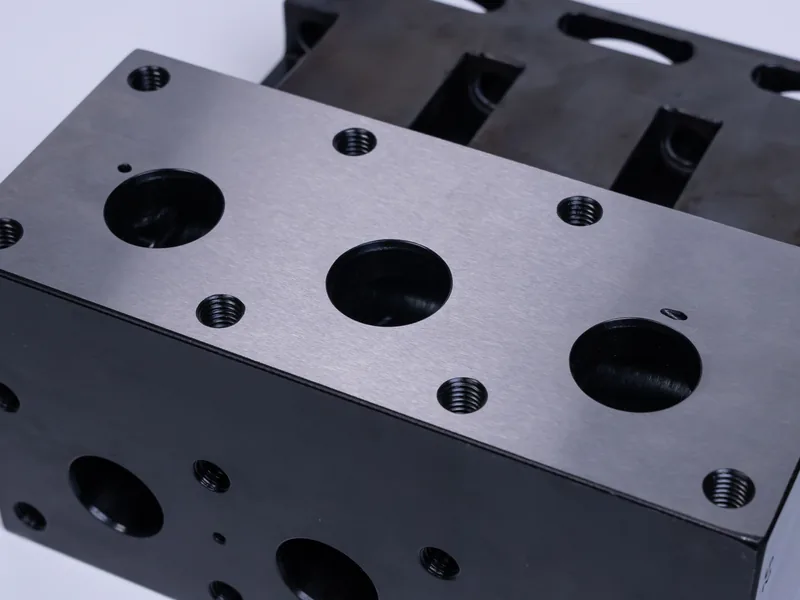
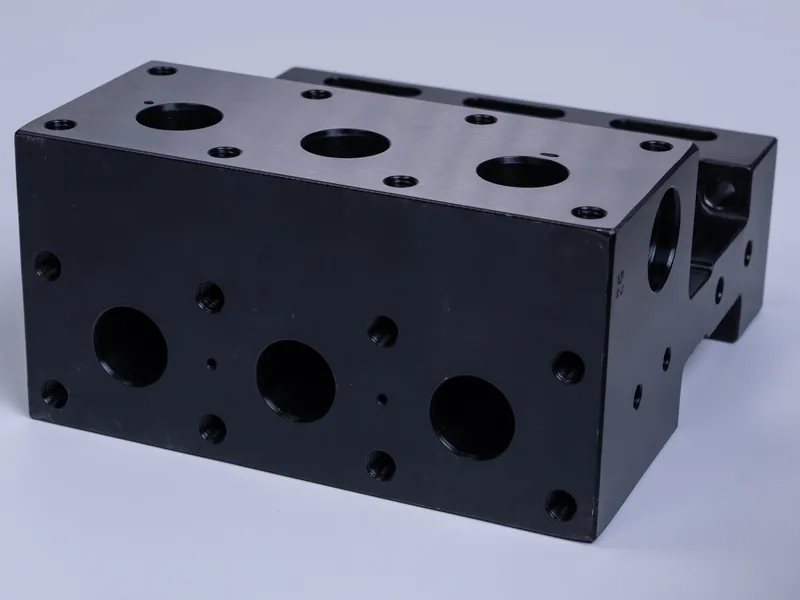
The whole string turns, so nothing on these parts is sheltered. Load, abrasion and vibration arrive together.
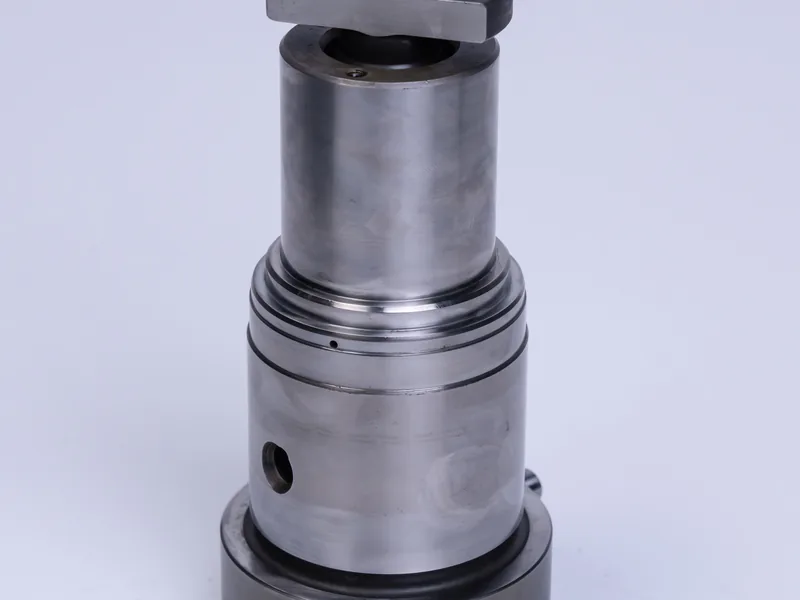
Core structural parts and pads/ribs for rotary steerable systems, 5-axis machined in Inconel 718 and other difficult alloys. The rotary-steerable systems we supply components for have completed over 3,700 wells and 3.6 million metres drilled.
| Capability | Detail |
|---|---|
| Materials | Inconel 718 structural parts; pads and ribs in wear-resistant alloy with laser-clad tungsten-carbide bands; P550 non-magnetic stainless where sensor clearance is required |
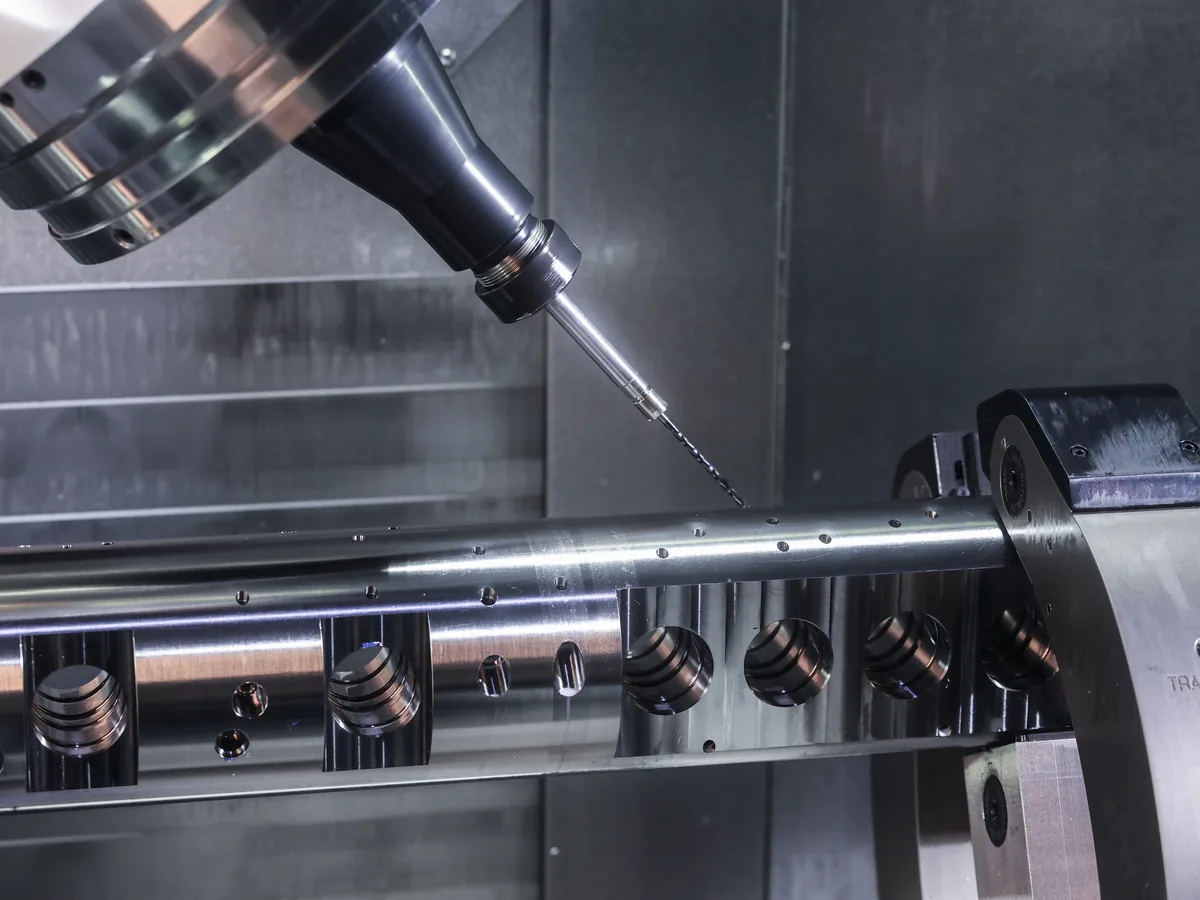
| 5-axis work | Mazak VARIAXIS i-800 (Ø800 class) and C-600 (Ø630 class); pad contact curvature and internal galleries in one setup |
| Large-part backup | Self-built FWG-M1260 five-face gantry, travels 6,000 × 1,200 × 650 mm; 13 self-built gun drills for deep and cross-hole features |
| Wear surfaces | Laser cladding with 60 % tungsten-carbide nickel-base wear bands — embedded particles above 2,000 HV, working hardness above 50 HRC; PTA and flame-spray hardfacing for rebuild |
| Batch scale | Our JV's automated rotary-steerable line covers 40+ key processes in-house — hundreds of parts a month, not prototypes |
| Inspection | CMM and 3D optical scanning; heat-number traceability and dimensional report with every order |
A rotary steerable tool steers while the entire drill string turns. Its structural parts carry load, abrasion and vibration at the same time, and there is no stationary sleeve for them to hide behind. Every surface is a working surface.
They push against the borehole wall thousands of times per hour, in abrasive mud, at 180 °C. The contact faces need engineered curvature — genuine 5-axis forms — plus an erosion-resistant layer that stands downhole service and can be rebuilt afterwards. Geometry and metallurgy are one problem here, not two.
IN718 delivers the strength-temperature envelope the tool needs, and work-hardens, generates heat and consumes tooling in exchange. Complex internal galleries, inclined cross-holes and thin-wall sections punish any weak link in the process chain.
These parts steer the well. A drifting steering section can compromise the borehole itself — so every feature has to be traceable: heat number, routing, inspection, right through to the report that ships with it.
Making one RSS part is a prototype. Making hundreds a month, identically, is a manufacturing system. In 2022 our JV commissioned China’s first automated rotary-steerable line, covering 40+ key processes in-house.


Chemistry, microstructure and mechanicals in our own materials lab
Simultaneous toolpaths programmed in-house by our own process engineers
On the BTA and gun-drilling lines — including the 13 self-built gun drills
Laser cladding or hardfacing, with machining allowance engineered into the program in advance
Mating and seal faces finished in-house
CMM and 3D optical scanning; functional validation on JV test stands where specified
The DFM feedback we give on RSS parts: pad curvature against cladding thickness trade-offs, datum schemes for 5-axis work that keep mating features honest, where laser-clad wear bands beat through-hardening, and when a forging should become a near-net shape instead.
Wear and erosion protection is the differentiator on this part family: laser cladding with 60 % tungsten-carbide nickel-base wear bands (embedded particles above 2,000 HV, working hardness above 50 HRC), PTA and flame-spray hardfacing, shot peening for fatigue life, and vacuum heat treatment to 1,250 °C — every operation under our own roof. Worn parts can be stripped, re-clad and re-machined back to drawing geometry.

TÜV Rheinland certified, certificate No. 01 100 019813, continuously certified since 2002
API Spec Q1 (Q1-4969, 10th Ed.), API 7-1 (7-1-1795) and API 7-2 (7-2-1240) are held by our joint venture Zhonghai Wantai, not by Zhongnan Machinery. RSS programmes run on JV lines under that certified system.
Since 2005 we have machined rotary-steerable and MWD components — over a decade of it for one of the three major international oilfield service companies. The systems we supply parts for have completed 3,700+ wells and 3.6 million metres drilled (as of July 2026).
JV high-temperature/high-pressure vessel rated 180 °C / 180 MPa, a 25 MPa water-loop stand for instrument strings up to 50 m, and a 60-ton dual-shaker vibration table for 12 m / 2-ton tools
Heat-number traceability, frozen routings, dimensional reports with every order; FAI packages and third-party inspection on request
Since 2005 we have machined rotary-steerable and MWD components — over a decade of it for one of the three major international oilfield service companies. The rotary-steerable systems we supply parts for have completed more than 3,700 wells and 3.6 million metres drilled.
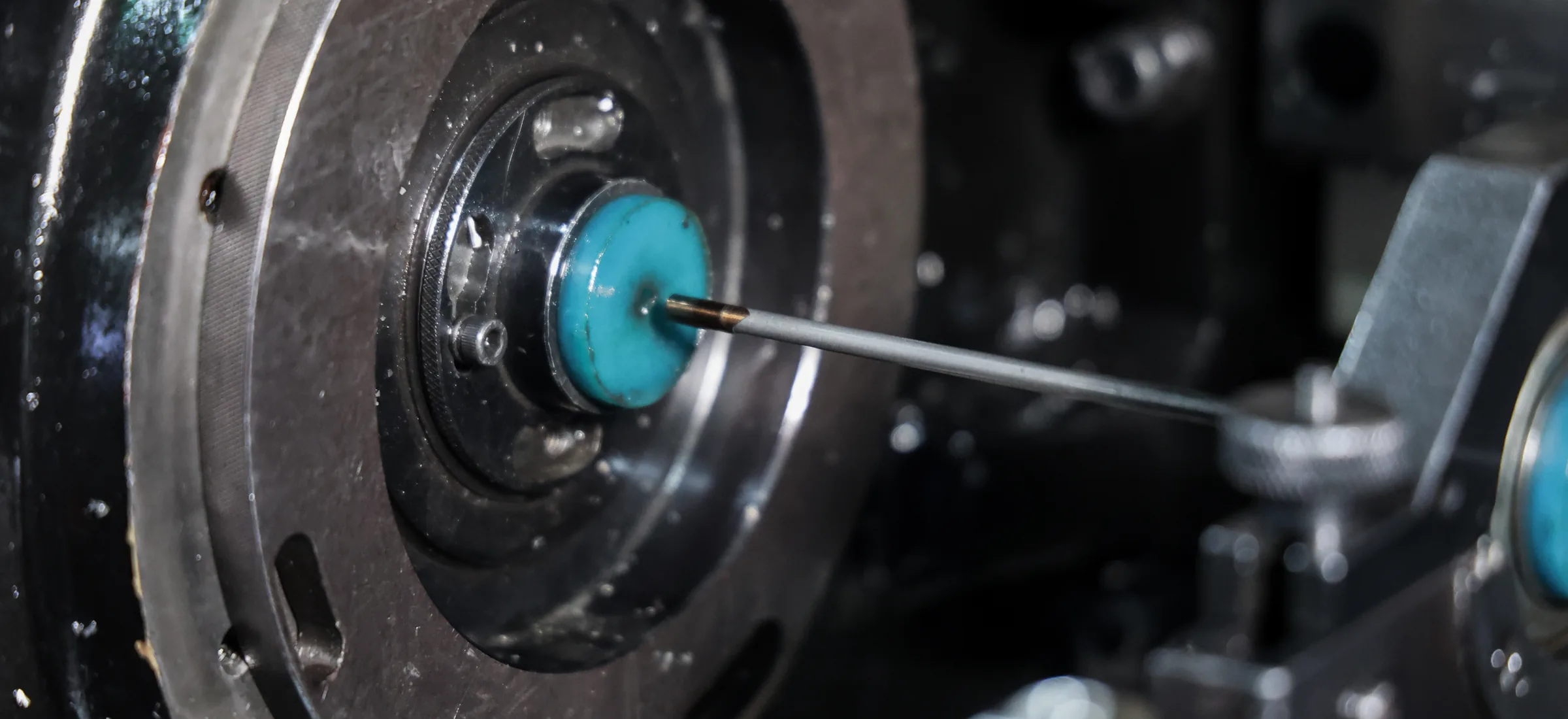
Yes — pads and ribs are in batch production. Complex 5-axis contact geometry plus laser-clad 60 % tungsten-carbide wear bands or PTA hardfacing, all in-house, and rebuildable when worn.
Yes. IN718 runs across our 5-axis and turning cells, and our JV’s automated rotary-steerable line covers 40+ key processes in-house. Batch scale is the normal case here, not the exception.
On JV test stands: a high-temperature/high-pressure vessel rated 180 °C / 180 MPa, a 25 MPa water loop circulating complete instrument strings up to 50 m, and a 60-ton dual-shaker vibration table rated for 12 m / 2-ton tools.
Yes — worn pads and ribs are stripped, re-clad or hardfaced, re-machined back to drawing geometry, and shipped with the same documentation package as new parts.
The drawing, the material grade, the wear-surface specification and thickness allowance, key tolerances, quantity per year and the service envelope. An engineer replies within 24 hours with manufacturability feedback; the quote follows once the information is complete.
Structural part, pad, rib, or any RSS component — the drawing is the starting point. Wear-surface specification and thickness allowance matter as much as the base geometry, so send both.
STEP / DWG / DXF / PDF welcome. NDA first if you prefer — yours or ours.
Related: Oil & Gas Drilling|5-Axis Machining|Inconel 718 Machining|MWD & LWD Housings