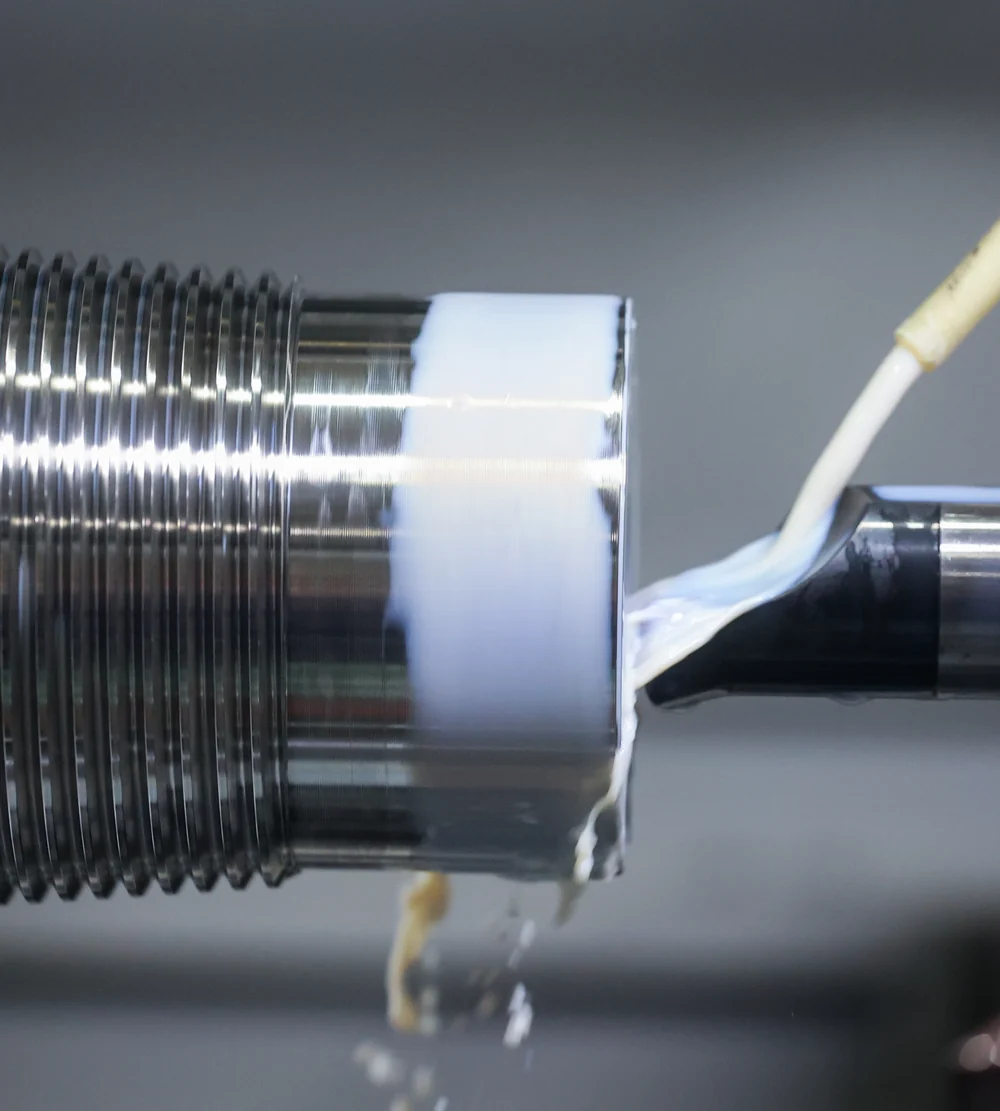
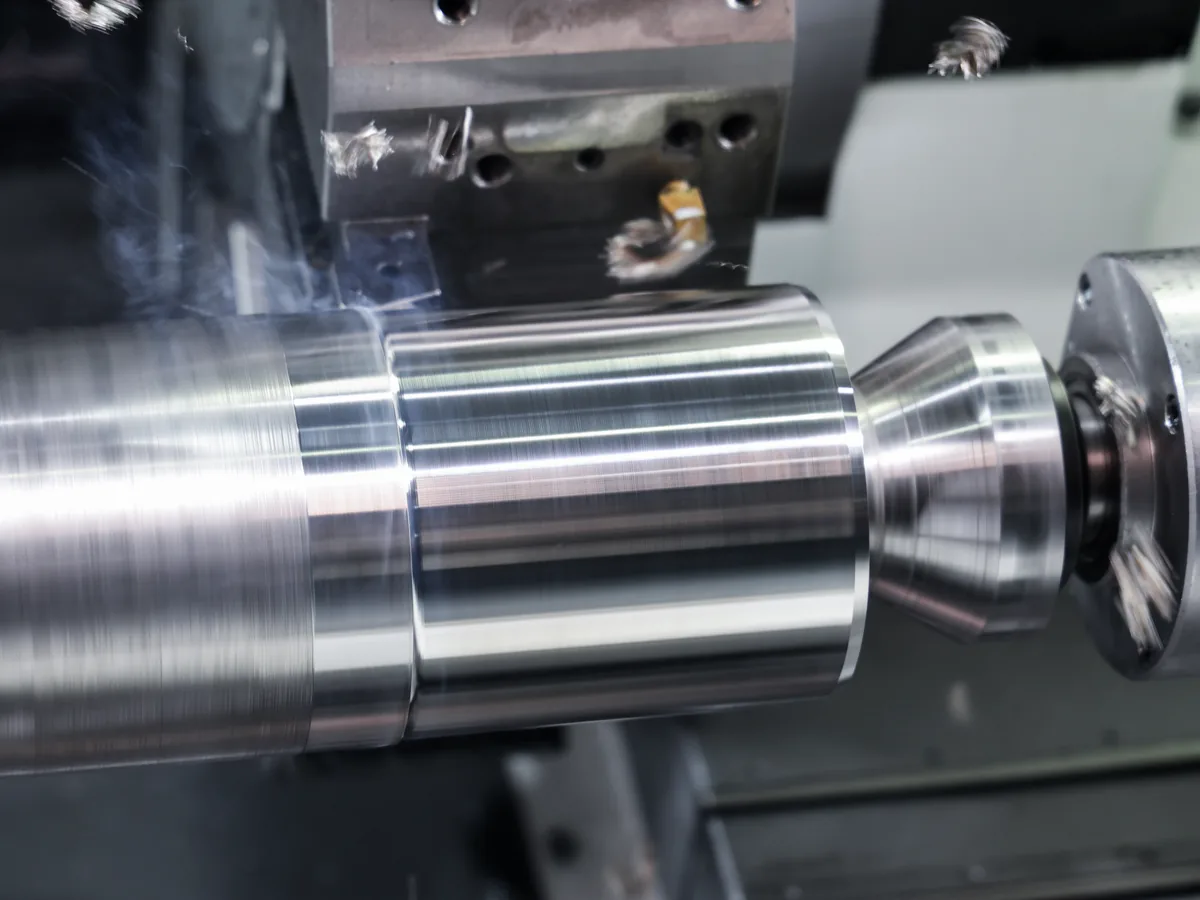
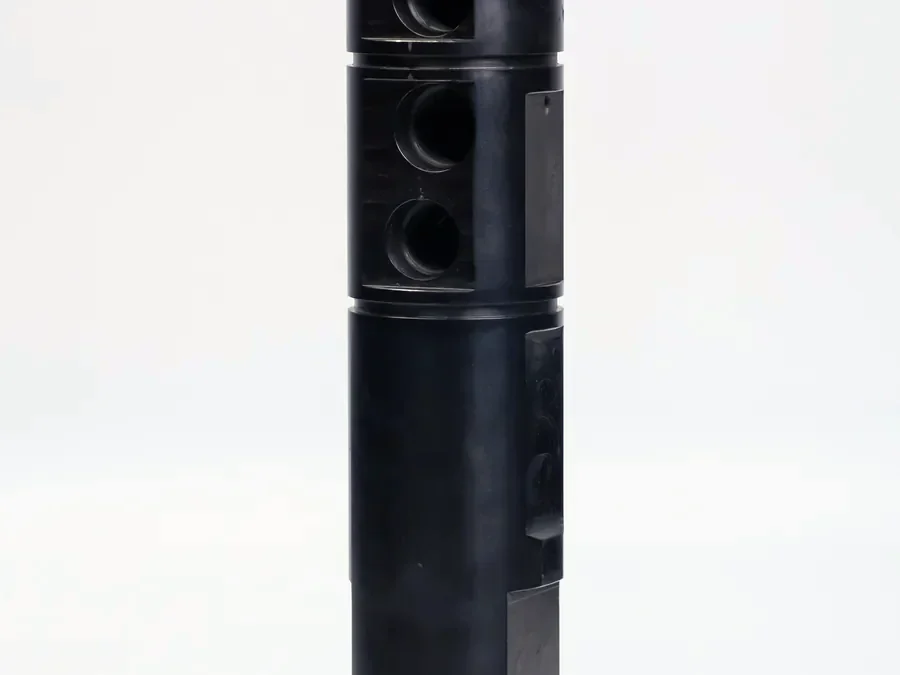
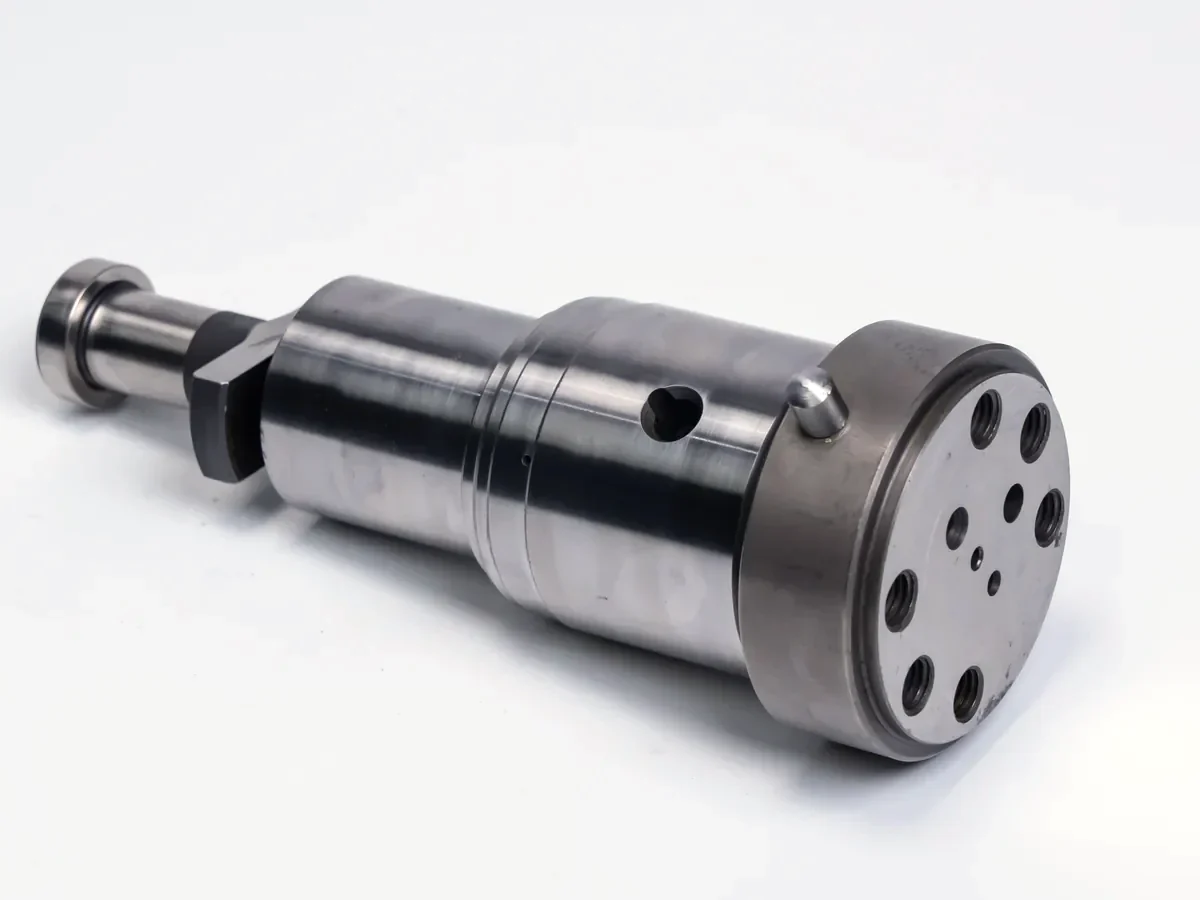
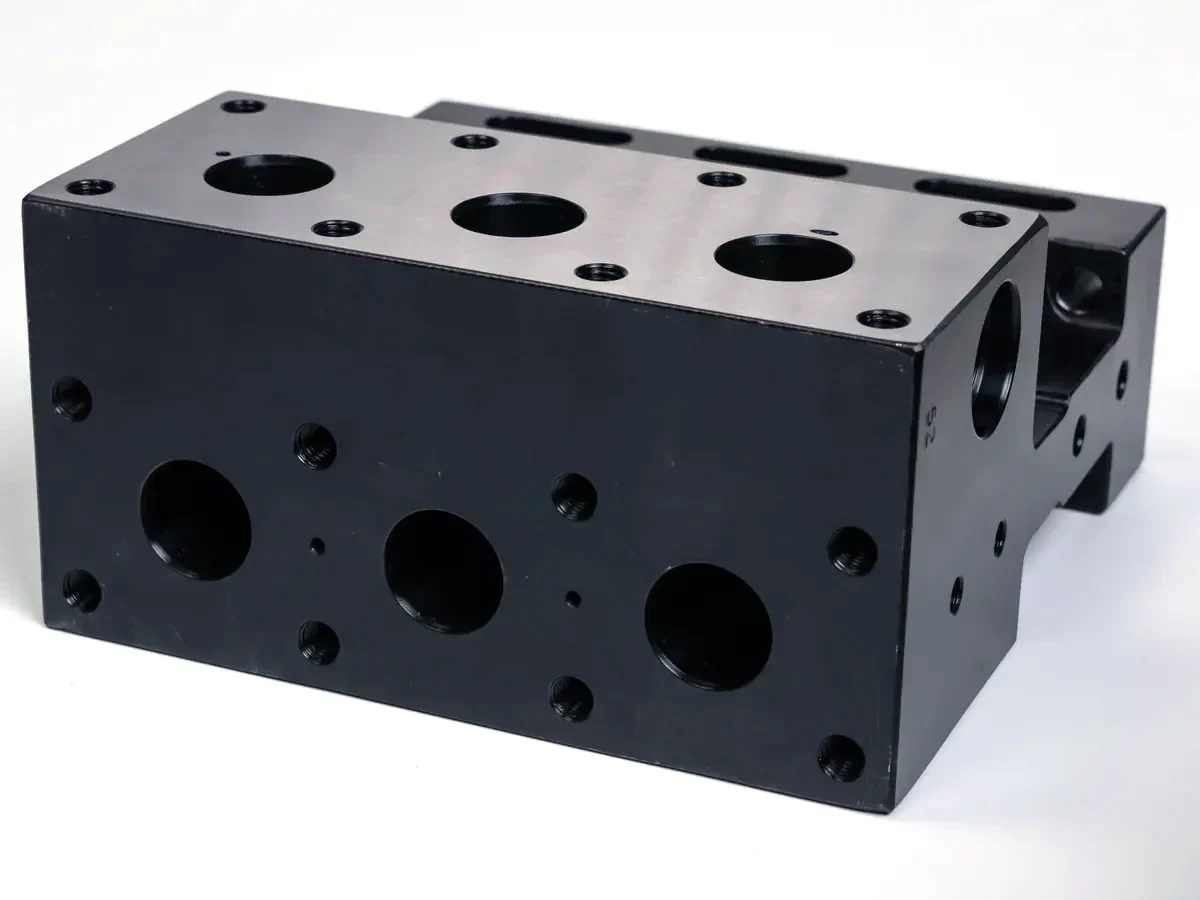
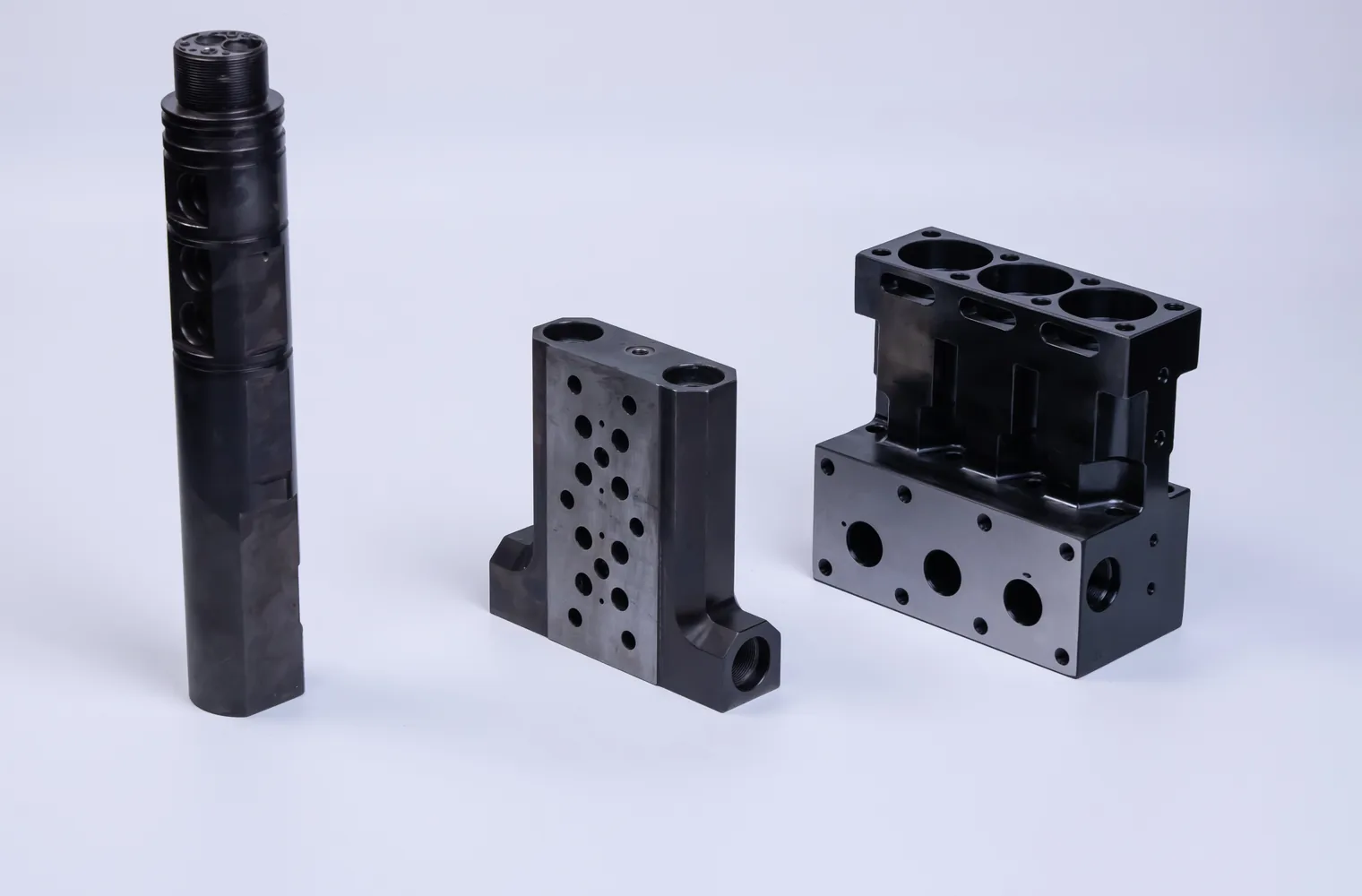
Milling and turning are the verbs of machining. Everything else is punctuation.
Every shop mills and turns. Our floor runs the materials that fight back — Inconel, titanium, non-magnetic alloys, high-strength steels — on Mazak INTEGREX mill-turn centers that complete turned and milled features in one clamping. Single pieces to batch production, ±0.01 mm at the machine, every part verified by in-house metrology.

Every shop claims milling and turning. The differences hide in the extremes:
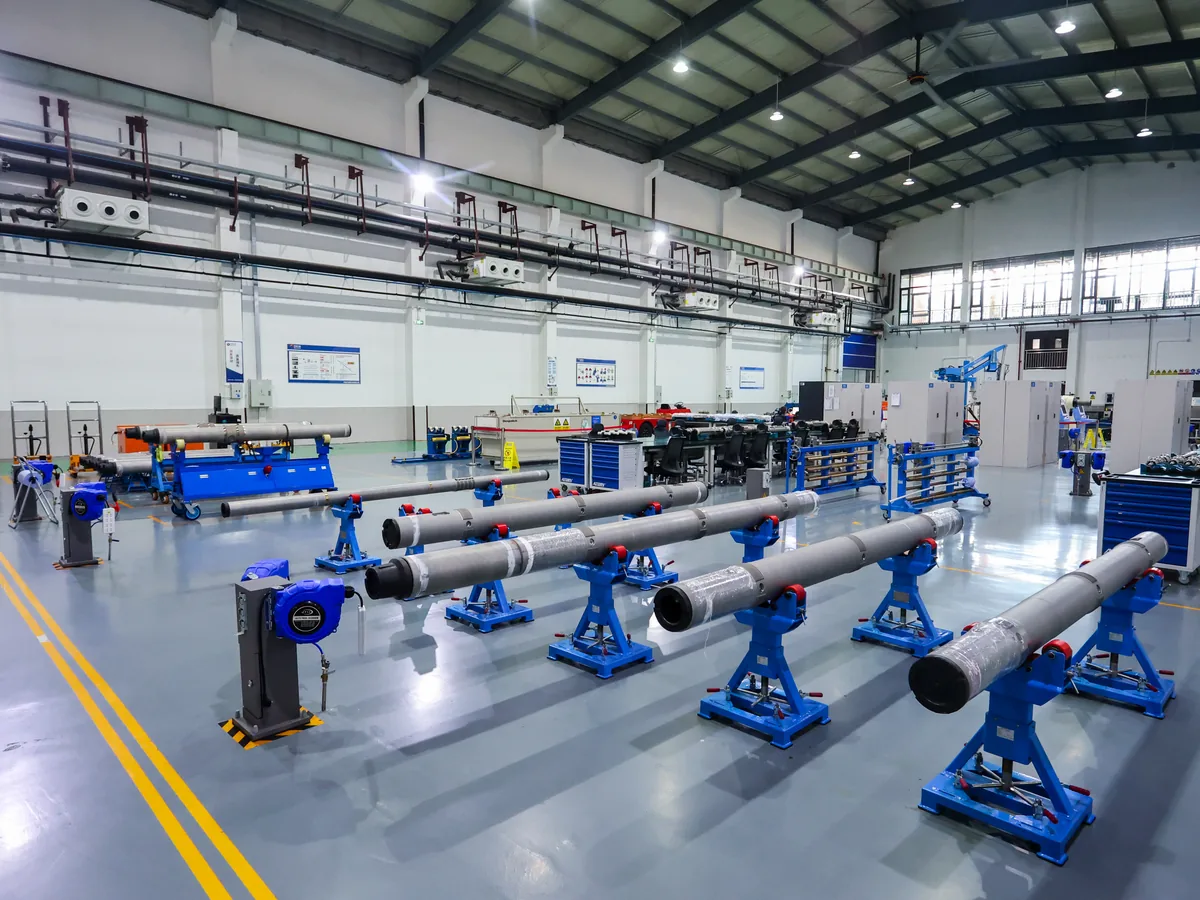
An 8-meter shaft bends under its own weight and the cutting force. Steady rests, support strategy, and cutting parameters decide whether the middle of the shaft matches the ends
A thin-wall sleeve rings like a bell under the tool. Fixturing, sequence, and stress relief decide the final roundness, not the machine’s brochure
Inconel work-hardens mid-pass; titanium welds itself to a dull edge. “Standard” feeds and speeds simply do not exist for these materials — the parameter windows are learned, not looked up
Part #1 to print is machining; part #1,000 to the same print, same week, is discipline. Tool wear compensation, in-process checks, and frozen routings are what batch production actually runs on
Turning and milling in one clamping: no re-chuck error, no queue between machines, no datum drift between the round features and the milled ones

| Parameter | Capability |
|---|---|
| Turning | To Ø800 × 8,000 mm (FWT-80800 class, built in-house); shop envelope to Ø1,000 × 10,000 mm |
| Milling | 3/4-axis milling; 5-axis for complex contours → 5-Axis Machining → |
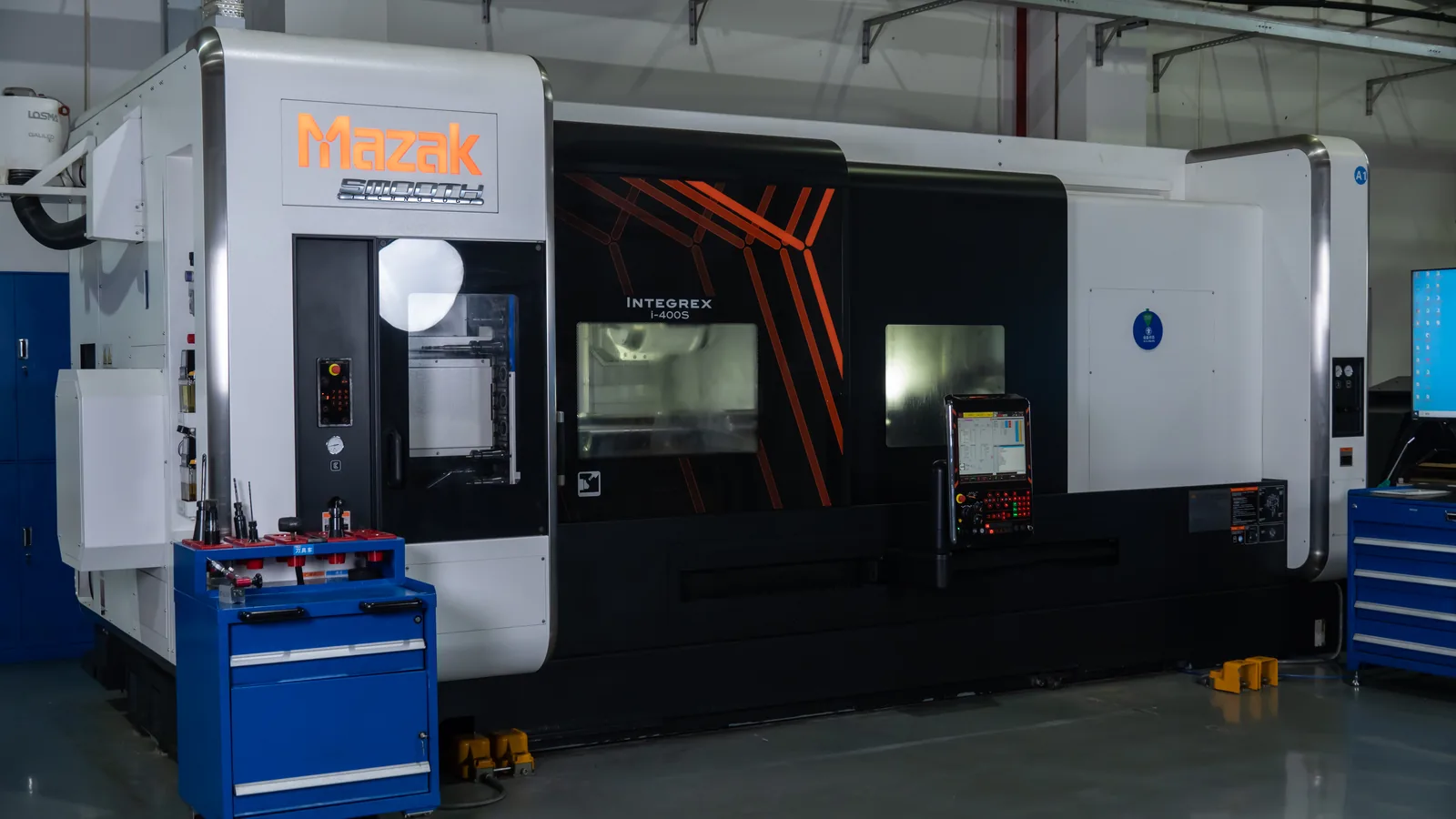
| Mill-turn | Turned and milled features in one clamping — Mazak INTEGREX i-500S (to Ø700 × 3,000 mm) & i-400S (Ø650 × 2,500 mm) |
| Tolerance | ±0.01 mm at the machine |
| Materials | Inconel 718, Incoloy 925, P550 & 15-15HS MAX, titanium TC4/TC11/TC18, stainless & alloy steels, aluminum, copper alloys |
| Volume | Single prototypes → batch production (oilfield programs in batch today) |
| Typical parts | Drive shafts, collars, marine shafts, valve bodies, structural housings, electrical frame structures |
Turning and milling are common. The materials we run are not. Our floor carries imported Mazak INTEGREX mill-turn centers — i-500S (to Ø700 × 3,000 mm) and i-400S (Ø650 × 2,500 mm) — that turn, mill, drill and bore a part in one clamping, so the datum never moves between operations.
A mill-turn center costs several times a comparable CNC lathe — capital that most general machine shops do not carry. We run them because our parts earn it: Inconel, titanium, non-magnetic P550 alloys, high-strength steels. Every re-clamping is a chance to lose a dimension, and on a mill-turn the finished surface comes straight off the machine — no grinding handoff downstream.
Over 100,000 part types have crossed this shop in three decades. The difficult ones are the reason these machines are here.

| Industry | Application | The record |
|---|---|---|
| Oil & Gas | Drive shafts, drill collars, hydraulic control bodies — batch production | Manufacturing partner of a rotary-steerable drilling program in China |
| Marine | Engine shafts, common-rail adjacent components | Part of the deep-hole program built when the technology and equipment could not be bought; certified by 7 classification societies |
| Aerospace | Structural parts in nickel-base superalloys | Qualified supplier in a national civil aircraft program — precision semi-finishing |
| Robotics | Shafts & joint parts for manipulators | Deep-sea manipulator parts in production |

Drive shafts, drill collars, marine shaft lines, circuit frames — five families cover most of what crosses this floor. What separates them is not the shape — it is what the shape demands:
| Part family | What it demands | Where it runs |
|---|---|---|
| Turned parts | Roundness, concentricity and straightness held over length — shafts, collars, sleeves, stepped spindles | Self-built FWT-80800 to Ø800 × 8,000 mm; steady-rest strategy for slender shafts |
| Long-bored parts | Deep, straight bores held over length in heavy-wall tubes — drill collars, stabilizer bodies | In-house deep-hole line, bore deviation ≤0.3 mm/m → Deep-Hole Drilling → |
| Milled parts | Flatness, hole position and pocket depth held across a large face — housings, bodies, plates, brackets | 3/4-axis machining centres, FWV / FWH class, built in-house |
| Complex-contour parts | Compound-curve surfaces and blended transitions a 3-axis path cannot reach | 5-axis simultaneous → 5-Axis Machining → |
| Flow-channel & cavity parts | Internal galleries, cross-holes and curved channels — milled open, then finished where no cutting tool can reach | 5-axis milling + in-house EDM → EDM → |
| Fitting & connector parts | Threaded joints, sealing faces and compound-angle ports that must seal on assembly | Mill-turn in one clamping — Mazak INTEGREX i-500S & i-400S |


Ø800 × 8,000 mm on our self-built FWT-80800; the shop’s overall envelope reaches Ø1,000 × 10,000 mm across processes. Beyond that, talk to us — combined processes on one floor solve most oversized parts.
Yes — batch programs for oilfield tools run on our floor today, with frozen routings and documented in-process checks at defined control points. Prototype quantities run through our Custom Manufacturing → line.
Long-shaft concentricity is a support-and-process problem we solve daily — movable steady rests, sequence planning, and stress management — on slender shafts to 8,000 mm between centers on our self-built FWT-80800. Send the drawing; we will quote the achievable runout feature by feature.
The full list from aluminum to Inconel 718 and P550 non-magnetic alloys — see Materials →.
With every order — mill certs with heat-number traceability and dimensional reports from our in-house metrology.
Upload your drawing — single piece or thousand-piece program. Within 24 hours, an engineer responds with manufacturability feedback.
Related: Capabilities Hub|5-Axis Machining|Deep-Hole Drilling|EDM|Precision Grinding