On an offshore rig, a failed downhole part does not get replaced. It gets fished — at six figures a day.
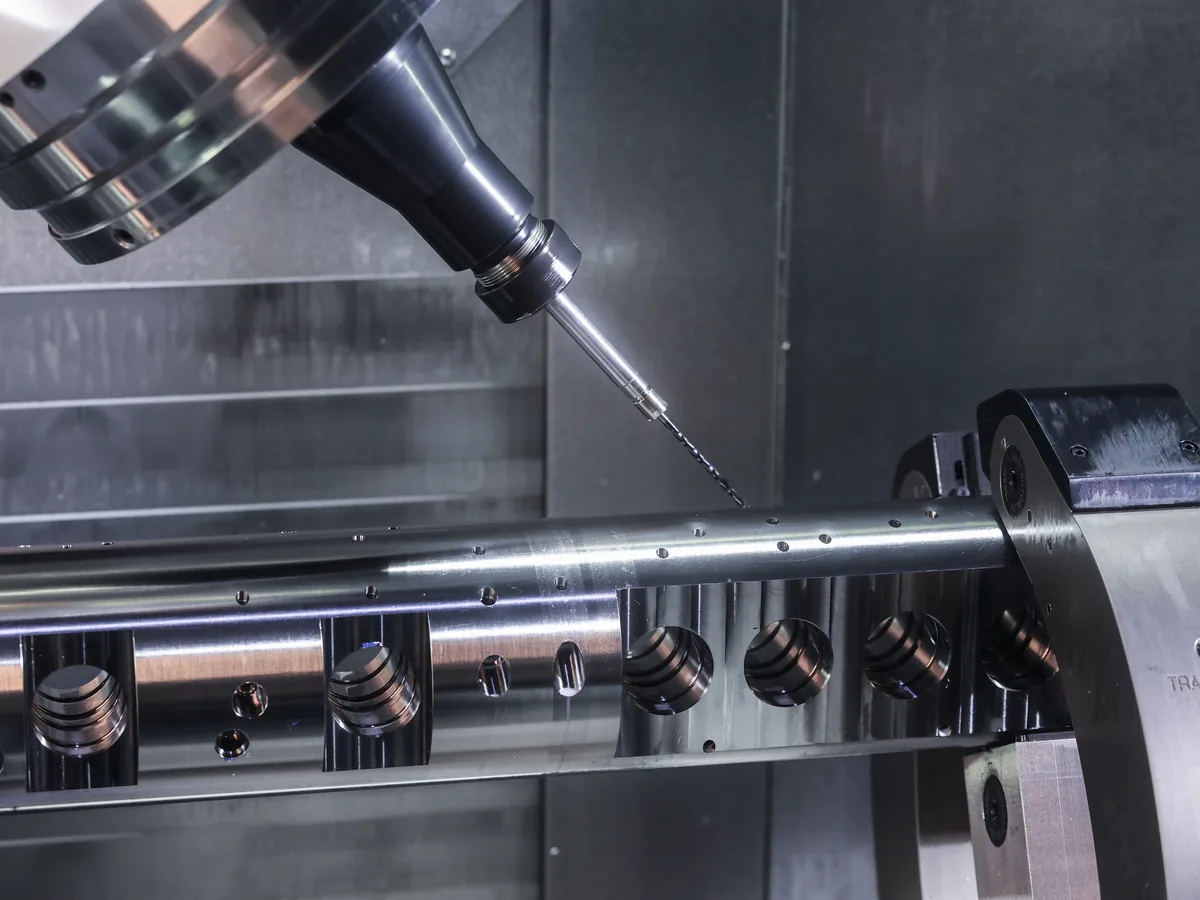
At 3,000 meters down, 180°C and 180 MPa, there is no quick fix — a failed component means tripping the string, a fishing job, and days of rig time burning. We machine the parts that cannot afford to fail: housings, drive shafts and drill collars for rotary-steerable and MWD systems — the same parts we deliver at scale to our joint venture’s rotary-steerable drilling program.

Drilling economics are brutal arithmetic:
A downhole program runs 20+ days of continuous operation; one mid-operation tool failure costs days of platform time
Retrieving a lost or failed tool means tripping thousands of meters of drill string, then sending down a fishing assembly: days of delay, if recovery succeeds at all
Housing fatigue cracks under cyclic torsion; thread galling in non-magnetic collars; seal failure at 180°C; electronics bay leakage at 180 MPa
These tools steer the well. A drifting rotary steerable section does not just fail itself; it can compromise the wellbore
This is why drilling contractors qualify machining suppliers the way airlines qualify engine shops: on documented process, material traceability, and track record — never on price alone.

Parts currently machined for rotary steerable, MWD/LWD and drilling programs:
| Part | Why it is hard | Go to page |
|---|---|---|
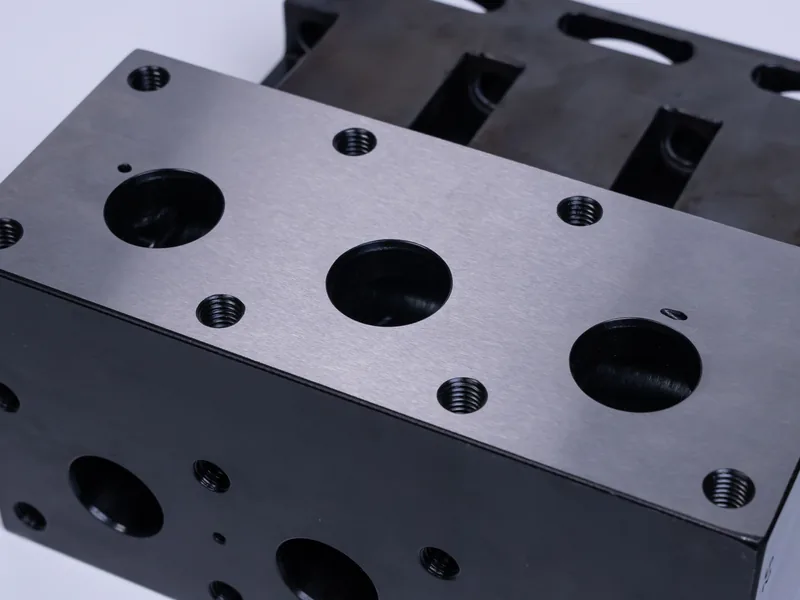
| Hydraulic control unit bodies | Complex internal galleries; pressure-boundary integrity | Valve Bodies |
| Upper & lower drive shafts | Long-shaft turning; concentricity over length; torsional fatigue | Drive Shafts |
| Non-magnetic drill collars (sonic, pulser, turbogenerator types) | P550 & 15-15HS MAX non-magnetic alloys — severe work-hardening; deep precision bores | Drill Collars |
| MWD/LWD housings | Thin-wall pressure housings; electronics-bay sealing surfaces | MWD & LWD Housings |
| Rotary steerable structural parts | Multi-axis features in superalloys; zero-defect documentation | Rotary Steerable Components |
| Circuit skeletons & sensor carriers | Small precision features inside pressure housings | Parts Hub | Send drawing |
Held by our joint venture, covering manufacture and service of rotary steerable drilling equipment, wireline logging equipment and critical machined parts. The programs we take on are machined and validated on the JV lines covered by this certification.
Drill stem subs and rotary shouldered connection threads, held by the same joint venture.
Certificate No. 01 100 019813, certified since 2002, continuously maintained.
The joint venture operates high-temperature/high-pressure test facilities rated 180°C / 180 MPa, a water-loop stand that circulates complete instrument strings up to 50 m at 25 MPa, and a 60-ton dual-exciter vibration table. Tools are validated on shore before they go downhole.
Material heat-number traceability, process routings, and inspection reports shipped with every order.

Rotary steerable systems were held by three international oilfield service companies for over two decades — rental only, fully encrypted, never sold. China became the second country to master the technology. Making it manufacturable at scale was a separate problem — that was us.
The track record, in sequence:
we machined rotary steerable and MWD components for one of the three major international oilfield service companies, for over a decade
a national bid was held for the program’s mass-production partner. We won
we took over the managed workshop with an 18-person core team whose shortest tenure was 12 years; in the first year we standardized 1,800+ part types
full component coverage achieved; mass production began
the joint venture Zhonghai Wantai was formed: 84 acres, 200+ precision machines, with Zhongnan as its machining partner
China’s first intelligent rotary-steerable production line commissioned, covering 40+ key processes in-house
Behind that timeline is full-process coverage. For the resistivity drill collar, all 15 key processes — 2.6-meter Ø5 mm gun-drilled holes, antenna-ring welding on special stainless, 20° inclined holes, vacuum potting — are done in-house. Work that once took about 25 days outsourced (including transport) now takes 10; the antenna welding and potting group went from 18 days to 3. For the hydraulic control unit body, all 17 key processes are covered: three critical bore systems once machinable at stable volume only overseas are now in stable domestic production.
Deep-hole accuracy, measured — not claimed. On our showroom reference part, a gun-drilled bore entered at (X, Y, θ) = (0.00, 44.50, 0°) and exited at (−0.24, 44.20, 0.31°) — maximum deviation under 0.3 mm over full length, beating the 1 mm/m industry benchmark — drilled in the difficult materials this page is about: nickel superalloys, high-nitrogen austenitic stainless and titanium.
One detail worth knowing: over the program, tooling cost share dropped from above 10% to below 8% — experience, converted into cost.
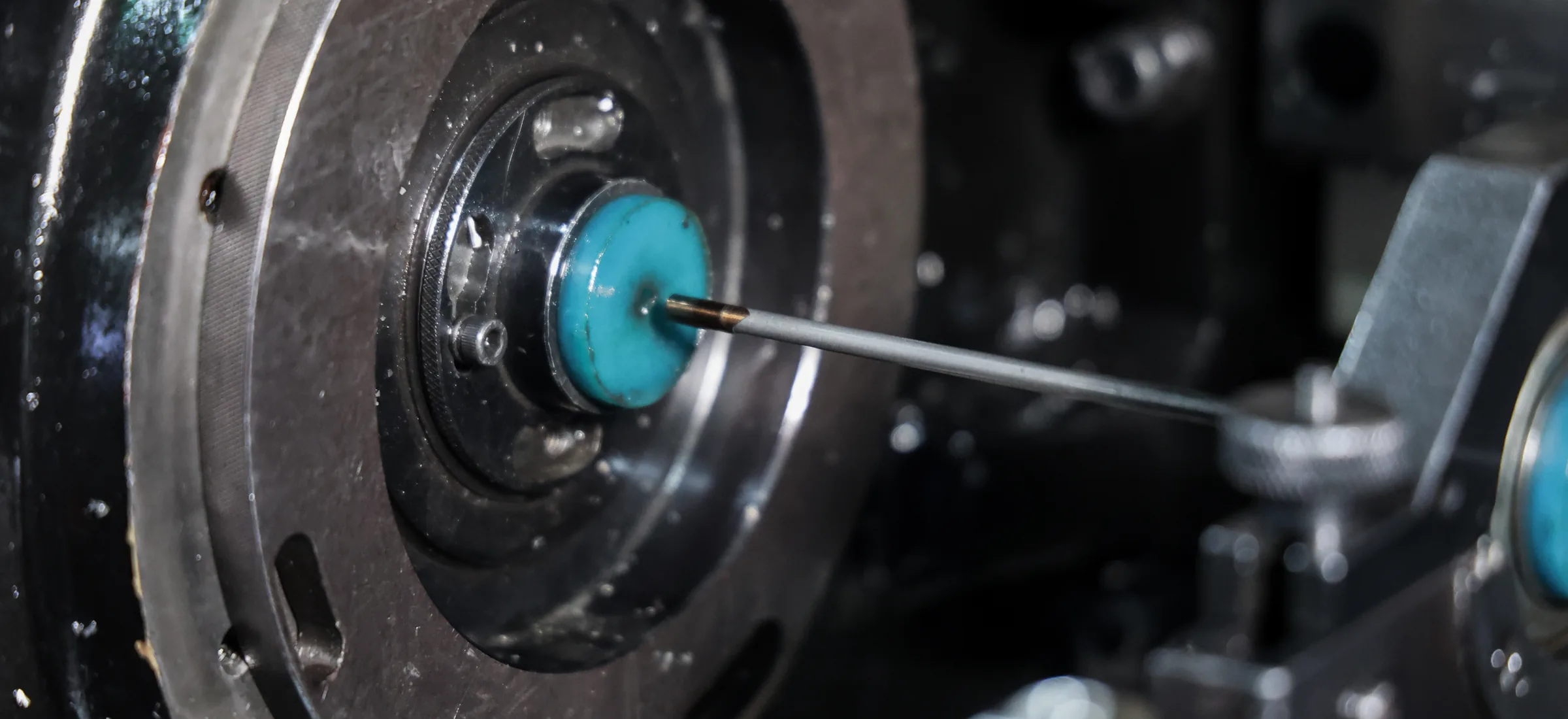
Downhole materials are chosen to survive corrosion, torque, and magnetic-interference constraints — properties that also make them demanding to machine:
Work-hardening, built-up edge, spring-back in deep bores — we have spent years learning how each of these alloys behaves on the tool. That is the part of machining that does not appear on any machine spec sheet.
| Material | Typical use | Our record |
|---|---|---|
| P550 non-magnetic stainless | MWD collars | Batch production — one of the few shops in China with P550 track record |
| 15-15HS MAX | Non-magnetic drilling components | In production |
| Inconel 718 / Incoloy 925 | High-strength corrosion-resistant housings & shafts | In production |
| Titanium TC4 / TC11 / TC18 | Weight-sensitive structural parts | In production |
How difficult, in numbers: on a relative machining-difficulty scale (carbon steel = 1.00), nickel superalloys rate 9.26, titanium 4.17, high-nitrogen austenitic stainless 3.47 — the three hardest families on that list are exactly what we run in daily batch production → Materials Hub.
Yes — we machined rotary steerable and MWD components for one of the three majors for over a decade starting 2005. Today we manufacture parts at scale for China’s rotary-steerable drilling program, as the machining partner of our joint venture.
Yes — P550 and 15-15HS MAX are in batch production with us. Non-magnetic alloys work-harden aggressively; parameter windows and tooling strategy matter more than machine brand, and that is where our years of downhole parts experience go to work.
Deep-hole drilling: 12 m machine envelope, 10 m effective depth — BTA and gun drilling from Ø3 mm, on machines we built ourselves, including our 7-axis CNC gun drill. Accuracy is measured, not claimed: on the reference part, a gun-drilled bore entered at (0.00, 44.50, 0°) and exited at (−0.24, 44.20, 0.31°) — under 0.3 mm over full length, beating the 1 mm/m benchmark.
Material certificates with heat-number traceability, process records, and dimensional inspection reports — oilfield-standard documentation with every order.
Yes. Worn seal areas, galled threads, and scored bores are rebuilt with in-house capability — PTA and flame-spray hardfacing (HF 3000, Stellite alloys), laser cladding with 60% tungsten-carbide nickel-based wear bands, and TIG bore welding (from Ø40 mm, to 2,000 mm deep). Repaired features are re-machined back to drawing dimensions, documented to the same standard as new parts. Send the worn part or the drawing — we will tell you honestly what can and cannot be repaired.
Upload your drawing — housing, shaft, or collar. An engineer who has machined these alloys for years will respond — with manufacturability feedback and the information we need for an accurate quote.
Related: Deep-Hole Drilling|Why Zhongnan