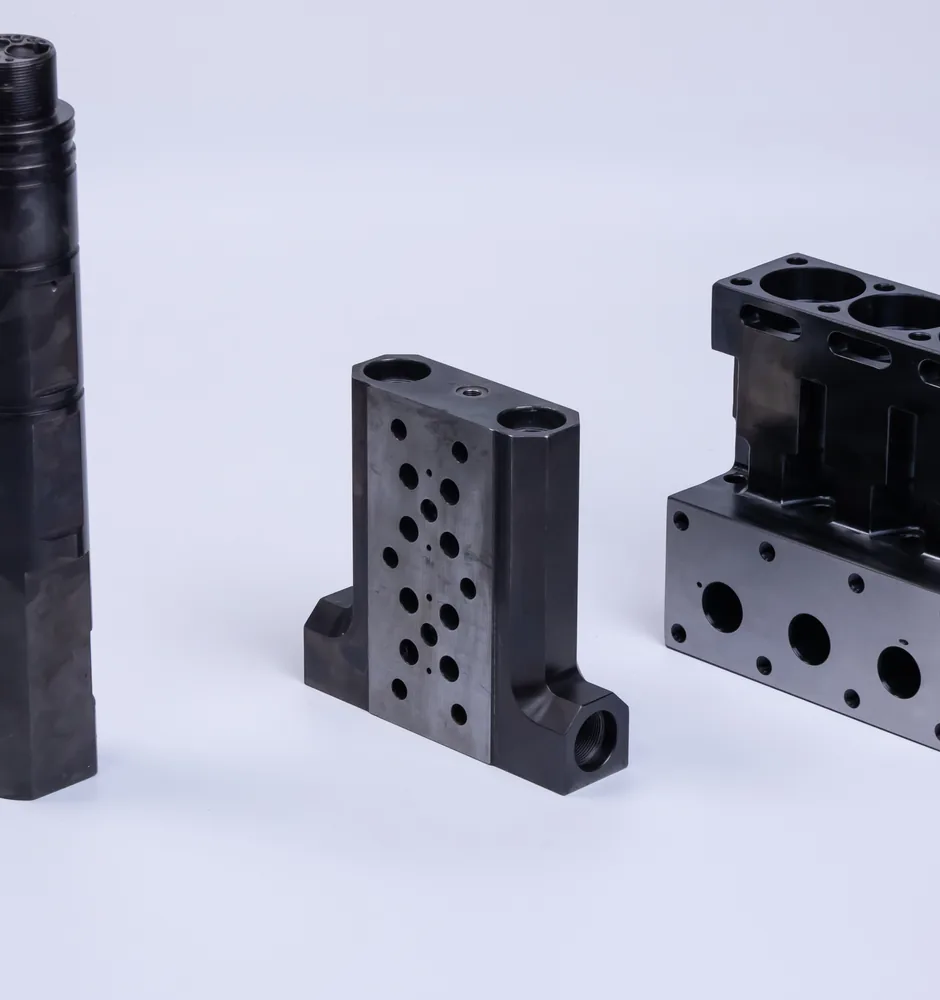
Anyone can claim difficult alloys. The proof is in which ones are running on our floor today.
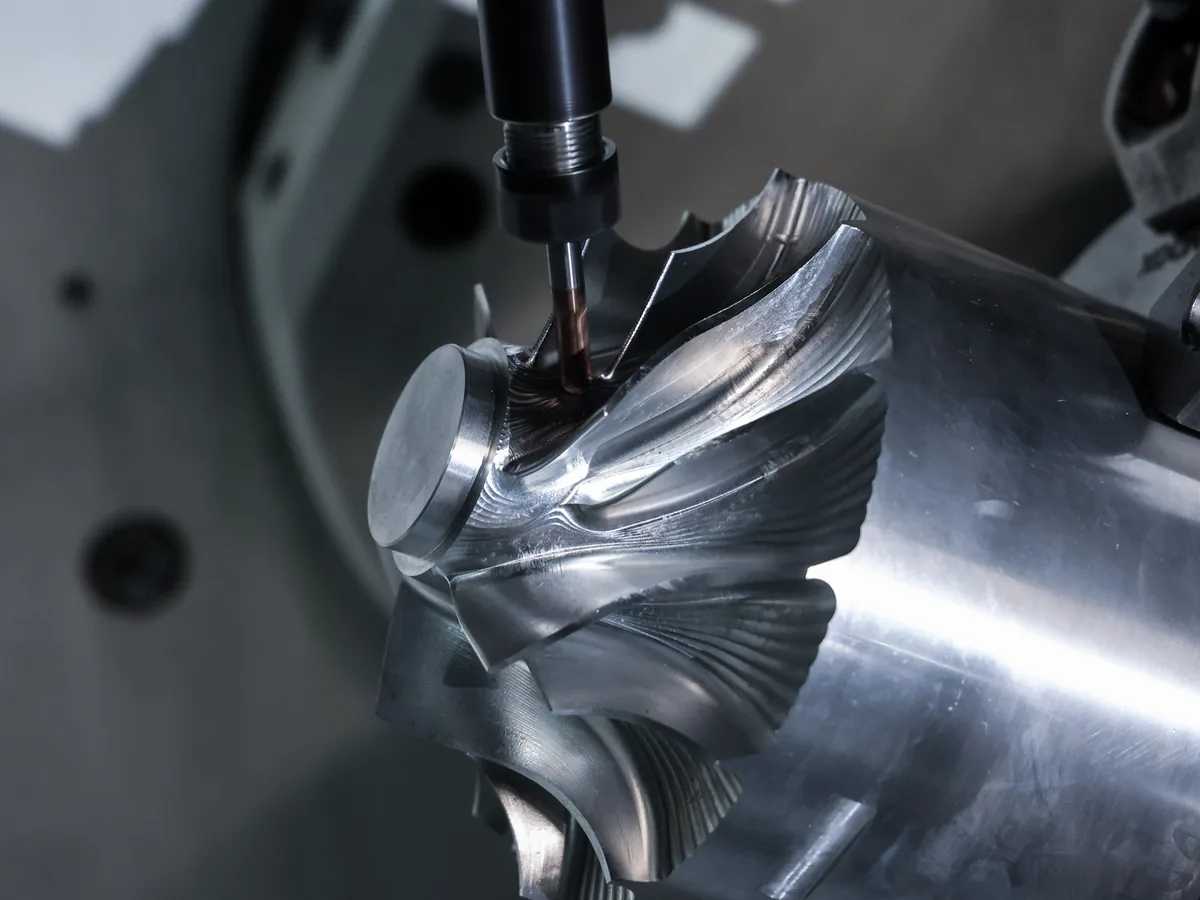
Nickel superalloys that work-harden with every pass. Non-magnetic alloys that spring back in deep bores. Titanium prone to built-up edge at the wrong speed. These are not occasional challenges here — they are the daily production mix, in batch quantities, with the tooling strategies to match.

Machine spec sheets do not cut metal — parameter windows do, and every alloy has its own:
Cut Inconel with a dull tool or a timid feed, and the surface hardens mid-cut until the tool gives up
The wrong speed in titanium welds the workpiece to the cutting edge, micro-weld by micro-weld
Non-magnetic alloys relax after the tool passes; a 10-meter bore that was in tolerance at the machine can drift out by the time it cools
Every one of these behaviors is learned in scrapped parts and worn tooling, over years. We have already paid that tuition
This is why “what materials do you run?” is the first question experienced buyers ask — and why we answer it with specifics.

Every alloy fights back differently. On a relative machining-difficulty scale — carbon steel = 1.00, higher means harder — this is where the materials we run daily sit:
Relative machining-difficulty coefficient — carbon steel = 1.00, higher means harder to machine.
The three hardest families on that list are not occasional jobs here — they are our production mix. That is what “materials are the capability test” means in practice.
And the precision holds in exactly those alloys: measured on a gun-drilled reference bore in difficult material — entry (X, Y, θ) = (0.00, 44.50, 0°), exit (−0.24, 44.20, 0.31°), maximum deviation under 0.3 mm, beating the 1 mm/m industry benchmark.

| Alloy | Where we run it |
|---|---|
| Inconel 718 | Aero control valve parts (national civil aircraft program); offshore downhole housings |
| Incoloy 925 | High-strength corrosion-resistant shafts & housings for offshore oil & gas |
Proven in: Aerospace →Oil & Gas →

| Alloy | Where we run it |
|---|---|
| P550 | MWD drill collars — batch production; to our knowledge, one of the few shops in China with this record |
| 15-15HS MAX | Non-magnetic drilling components, in production |
Proven in: Oil & Gas →

| Alloy | Where we run it |
|---|---|
| TC4 / TC11 / TC18 | Parts for a national civil aircraft program; deep-sea manipulator components |
Proven in: Aerospace →Robotics →

| Alloy | Where we run it |
|---|---|
| 34CrNiMo6 · 42CrMoA · 00Cr17Ni14Mo2 | Common rail pipes, injector nozzle bodies, exhaust valves, plunger-barrel pairs — marine diesel parts in batch production |
Proven in: Marine →

| Alloy | Where we run it |
|---|---|
| Stainless steels, alloy steels, aluminum, brass and bronze | Fully supported, with the same traceability and inspection discipline. If your print calls a common grade, the answer is yes |
Difficult alloys demand proof at both ends — what the mill delivered, and what we shipped:
The alloy’s mill origin follows your part through every operation to the inspection report
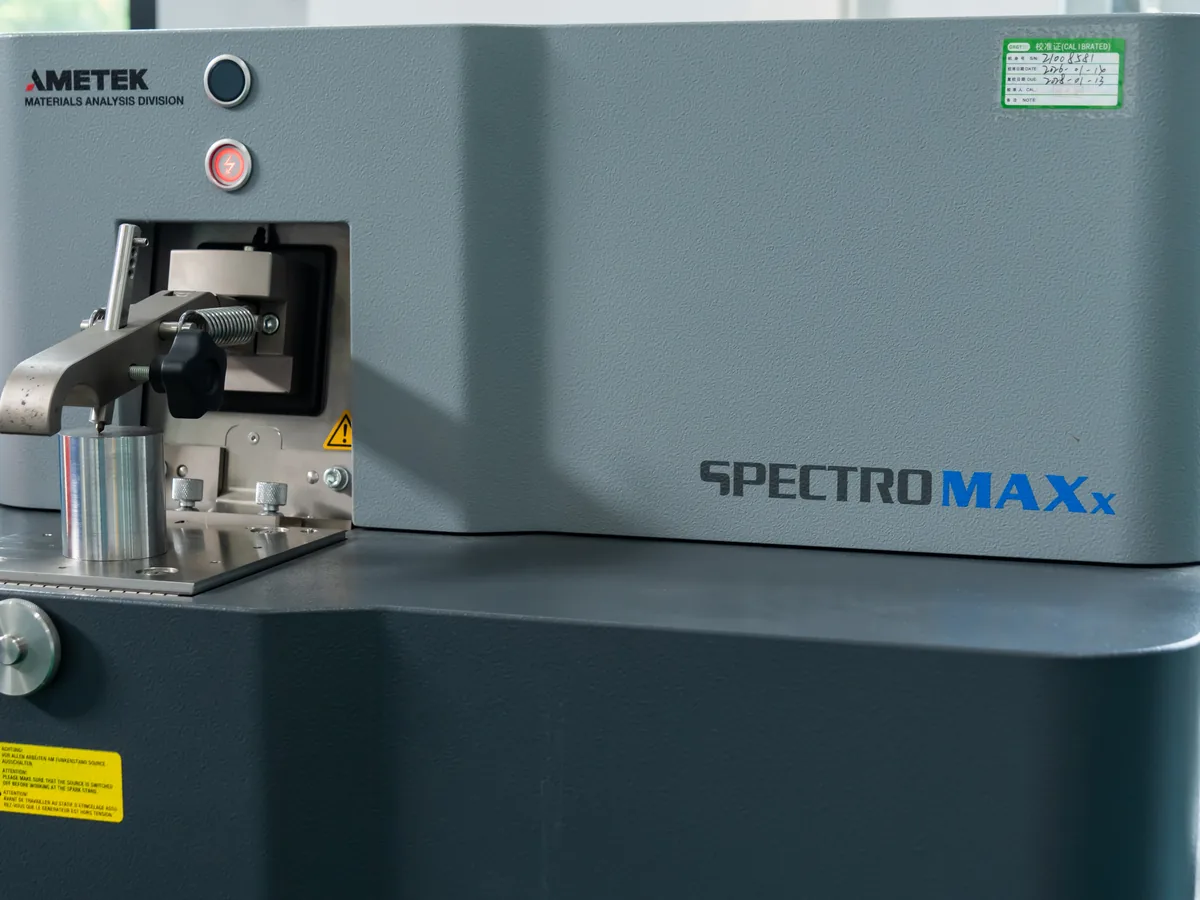
Incoming verification by SPECTROMAXx 08 optical emission spectrometer; no certificate is taken at face value
Mill certs plus our inspection reports, in the documentation package your quality team expects

The grid above is what runs daily — not the limit of what we can cut. New alloys enter our floor the way they always have: send the drawing and the grade; our engineers will tell you honestly what we have cut before, what is adjacent experience, and what would be new territory. Thirty years of accumulation transfers faster than you might expect.
Inconel 718 and Incoloy 925; P550 and 15-15-class non-magnetic stainless; titanium TC4 / TC11 / TC18; 34CrNiMo6, 40CrNiMoA, 42CrMoA and 00Cr17Ni14Mo2; plus standard stainless steels, alloy steels, aluminium, brass and bronze.
On a relative machining-difficulty scale where carbon steel = 1.00: nickel superalloys 9.26, titanium 4.17, high-nitrogen austenitic stainless 3.47, martensitic stainless 1.98. Higher means harder to cut.
Every heat is checked by positive material identification on a SPECTROMAXx 08 optical emission spectrometer — no certificate is taken at face value. The mill heat number follows your part through every operation to the inspection report.
Send the drawing and the grade. Our engineers will tell you honestly what we have cut before, what is adjacent experience, and what would be new territory.
Upload your drawing and the alloy — an engineer who has run these materials in production will respond with manufacturability feedback and tooling advice. NDA welcome.
Related: Capabilities Hub|Oil & Gas|Aerospace