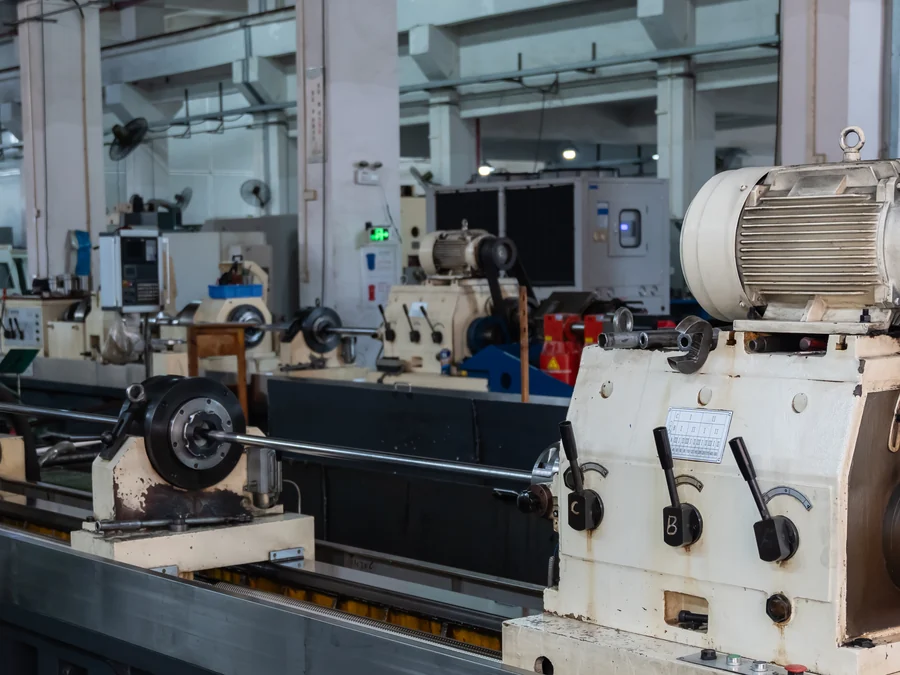
The deeper the hole, the fewer the shops. At 12 meters, the room gets very quiet.
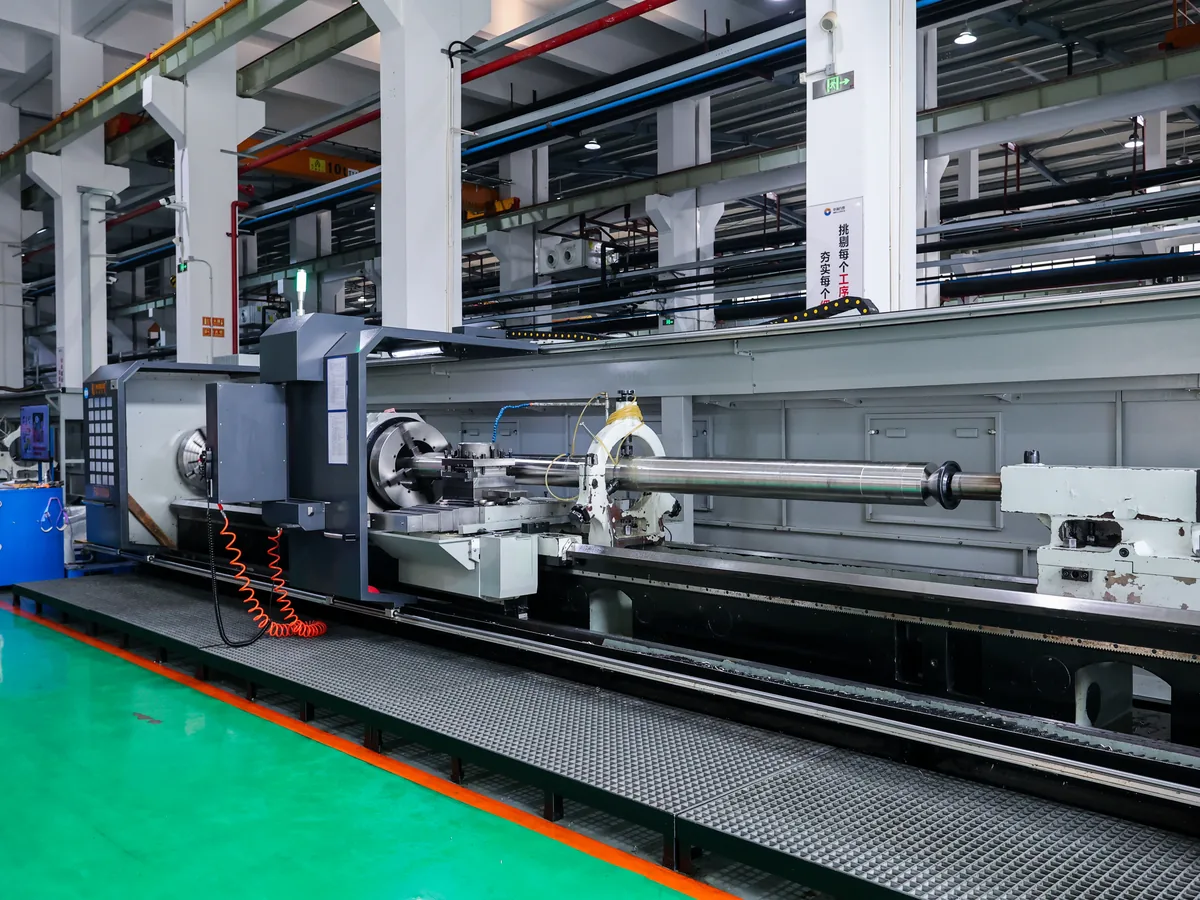
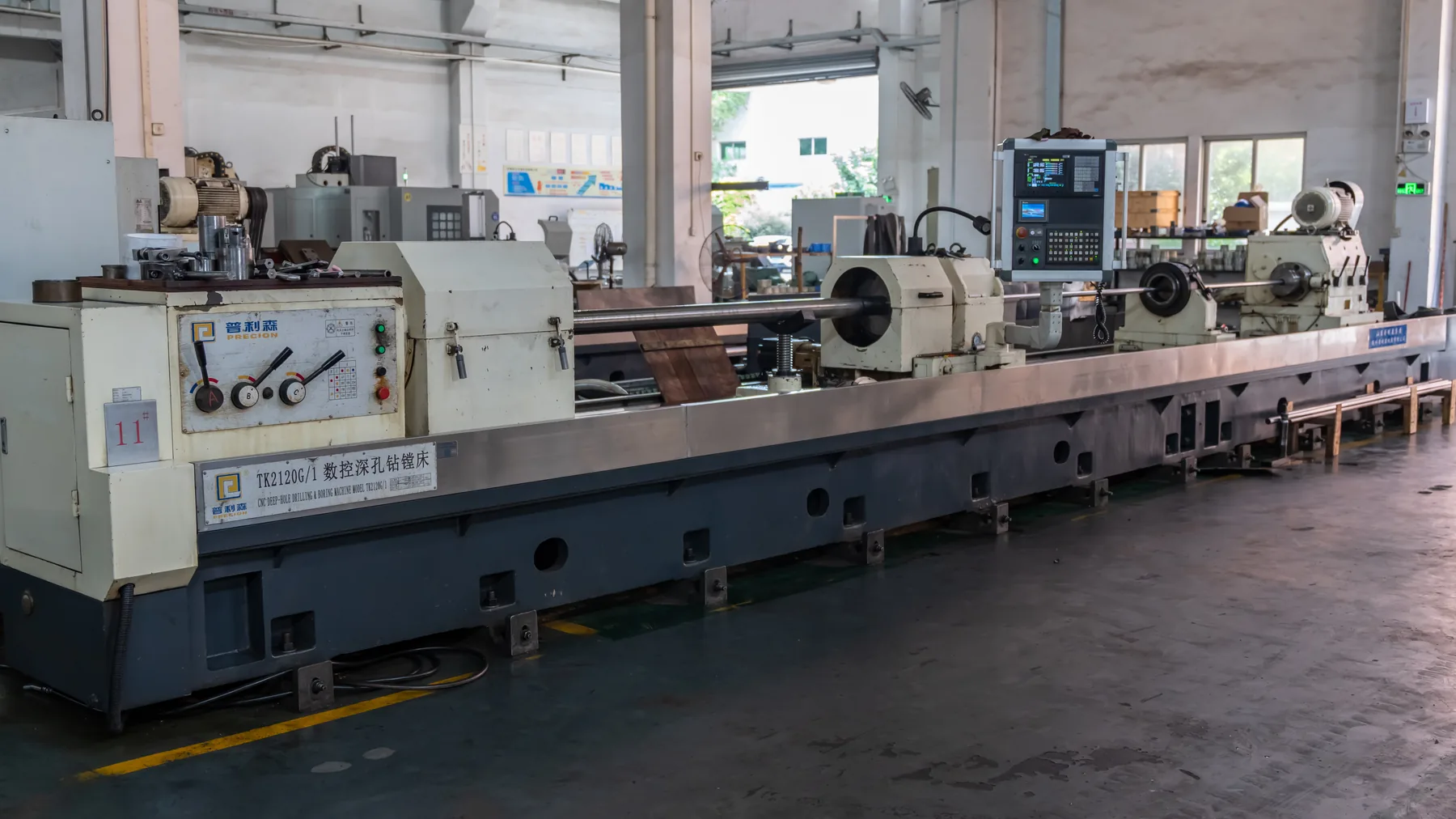
BTA drilling from Ø20 to 360 mm — machines with 12 m travel, cutting an effective 10,000 mm, order after order — in superalloys, non-magnetic alloys, titanium, and high-strength steels. Small precision holes (Ø2–40 mm) run on gun-drilling machines we designed and built ourselves → see our Gun Drilling line.

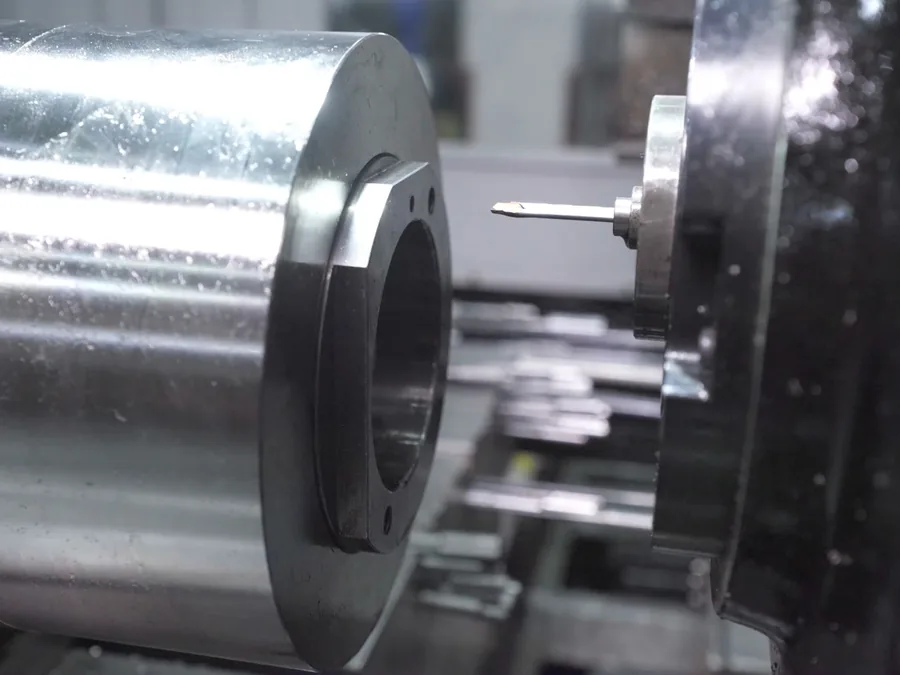
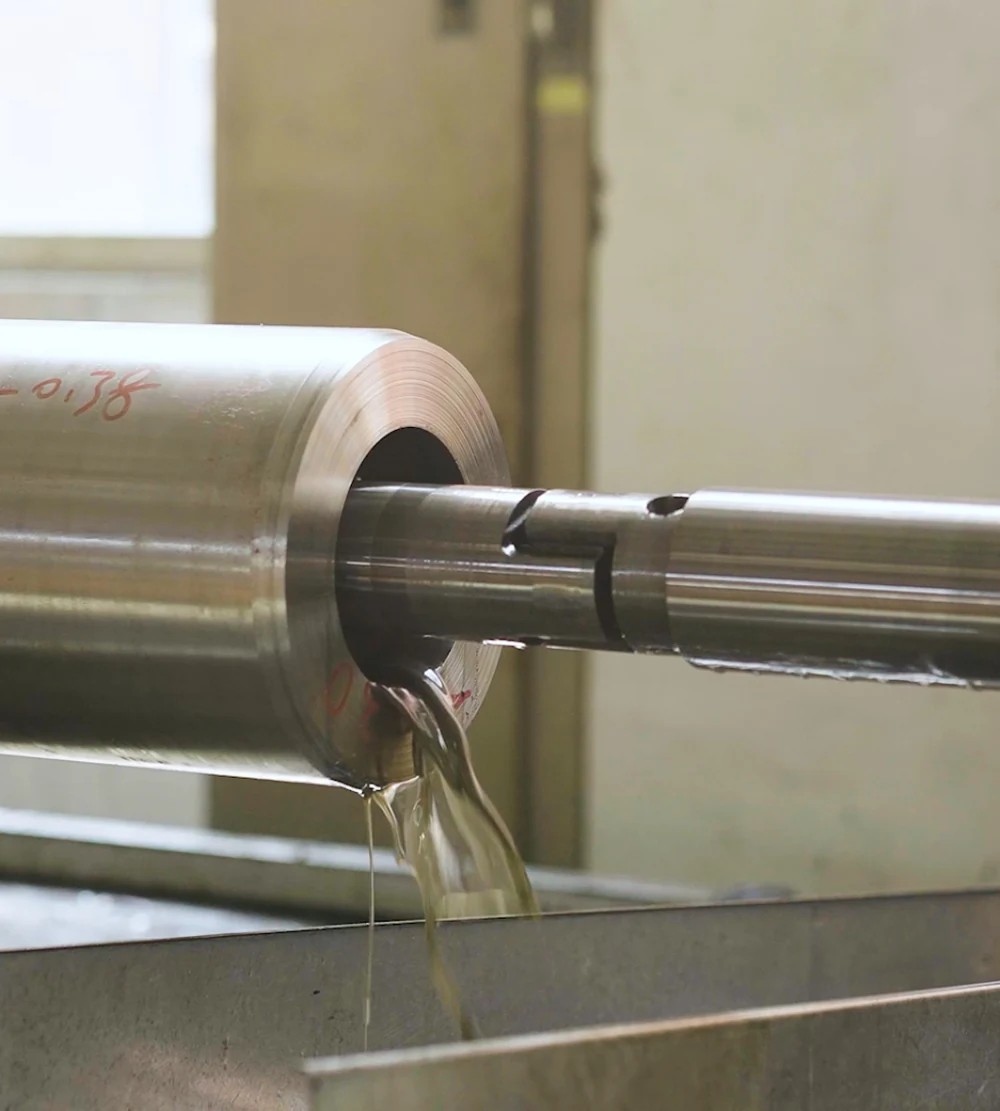
In BTA drilling, high-pressure coolant carries chips out through the hollow center of the drill tube as they form. The deeper the hole, the longer that escape route. Chips that cannot get out score the bore wall and wear the tool — one jammed chip can mean a broken tool, and a scrapped workpiece.
Every drill wanders. Over 10 meters, a microscopic deflection per millimeter compounds into millimeters of drift at the bottom. Keeping a deep bore straight is a process, not a setting.
Cutting heat concentrates at the tool tip, meters from the nearest open surface. Coolant pressure, flow, and filtration stop being utilities — they become process parameters.
Work-hardening alloys harden mid-hole; spring-back alloys relax after the tool passes. A bore that measures in tolerance at the machine can drift out as it cools.
Internal ring grooves, stepped bores, eccentric bores: standard tools cannot reach them. Each one means dedicated tool design and a machining process built around it.
You cannot see the bottom of a 10-meter bore. You trust the process, or you scrap the part.
This is why deep-hole capability separates machine shops into two kinds: those that own the process, and those that quote it and hope.

BTA (Boring and Trepanning Association) tooling pushes coolant in around the tool and carries chips out through its center — the architecture that makes meter-deep large bores possible. It is the process behind the drill collars, hydraulic bodies and large shafts that our customers reorder year after year.
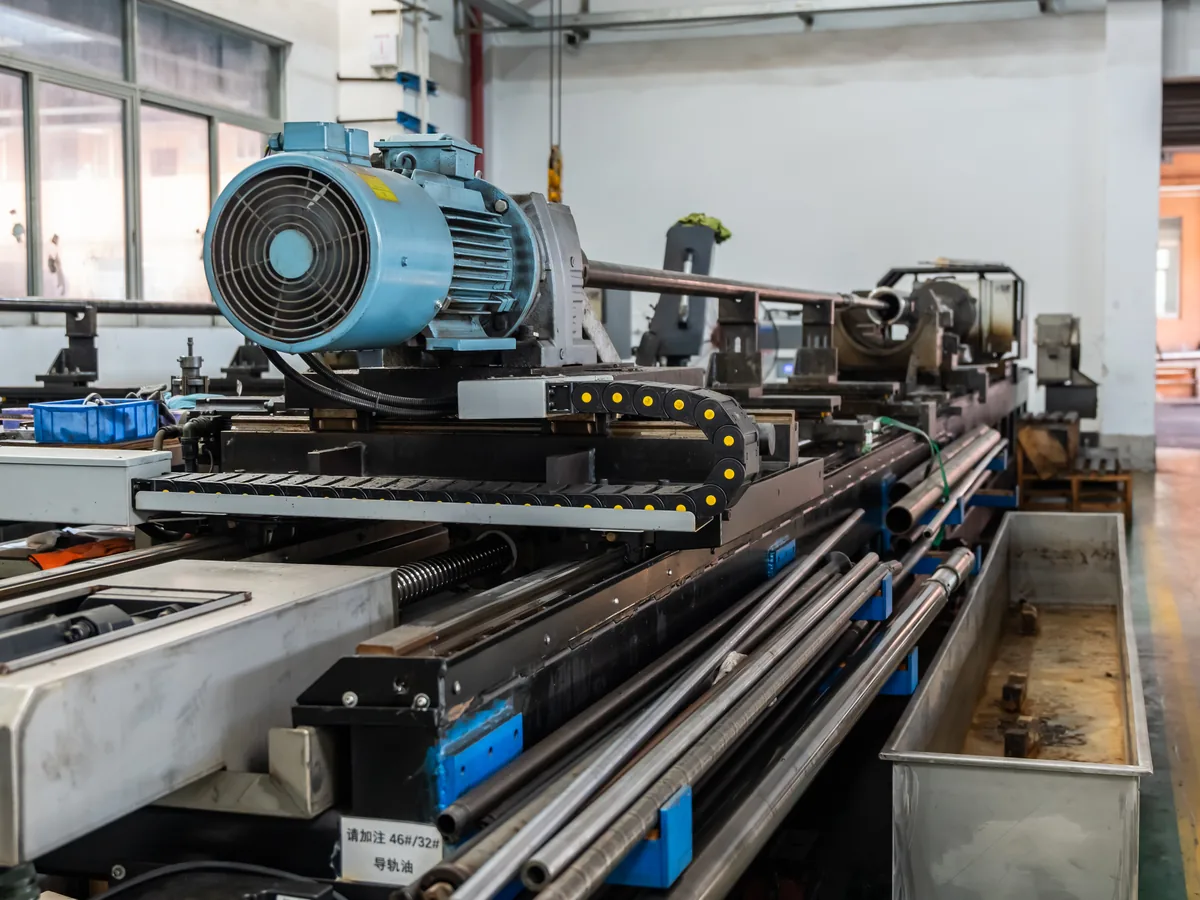
Our 12-meter line is a drilling-and-boring machine: drilling opens the hole from solid; boring follows with a guided head to true it — straighter, rounder, to size. Running both on one machine, in one setup, is exactly how the bore stays honest: no second clamping, no second error. Two numbers, honestly stated: 12,000 mm is the machine’s travel; 10,000 mm is the effective depth we deliver in production, order after order.

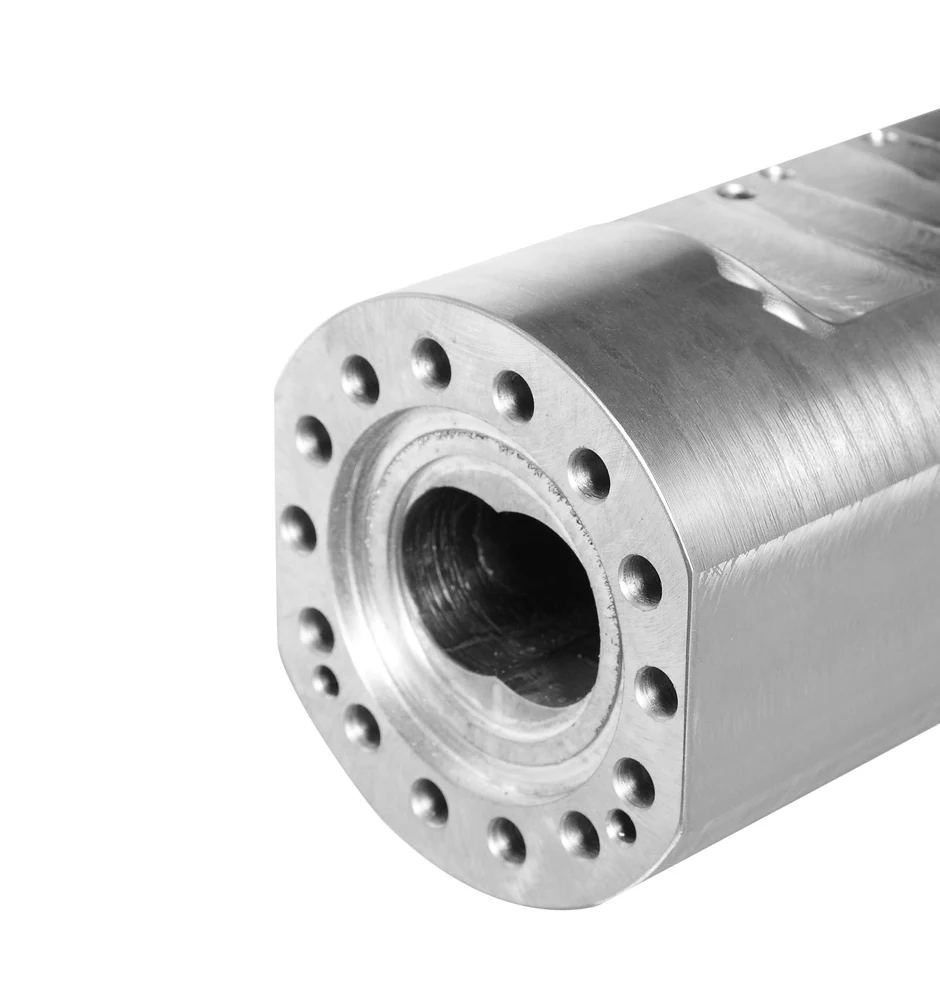
And the bore is not always straight-through. Internal annular grooves, eccentric bores, and multi-step seal bores belong to the same process envelope — features machined inside the deep hole, in the same setup, because a second clamping would cost the concentricity the seal depends on. Internal groove machining inside deep bores is one of our core processes.
| Parameter | Capability |
|---|---|
| Diameter range | Ø20 – 360 mm |
| Depth | Machine travel: Ø20–360 × 12,000 mm | Effective depth: Ø20–300 × 10,000 mm |
| Process coverage | Solid drilling + deep-hole boring (counterboring) + internal annular grooves / eccentric bores / multi-step seal bores — same machine, same setup |
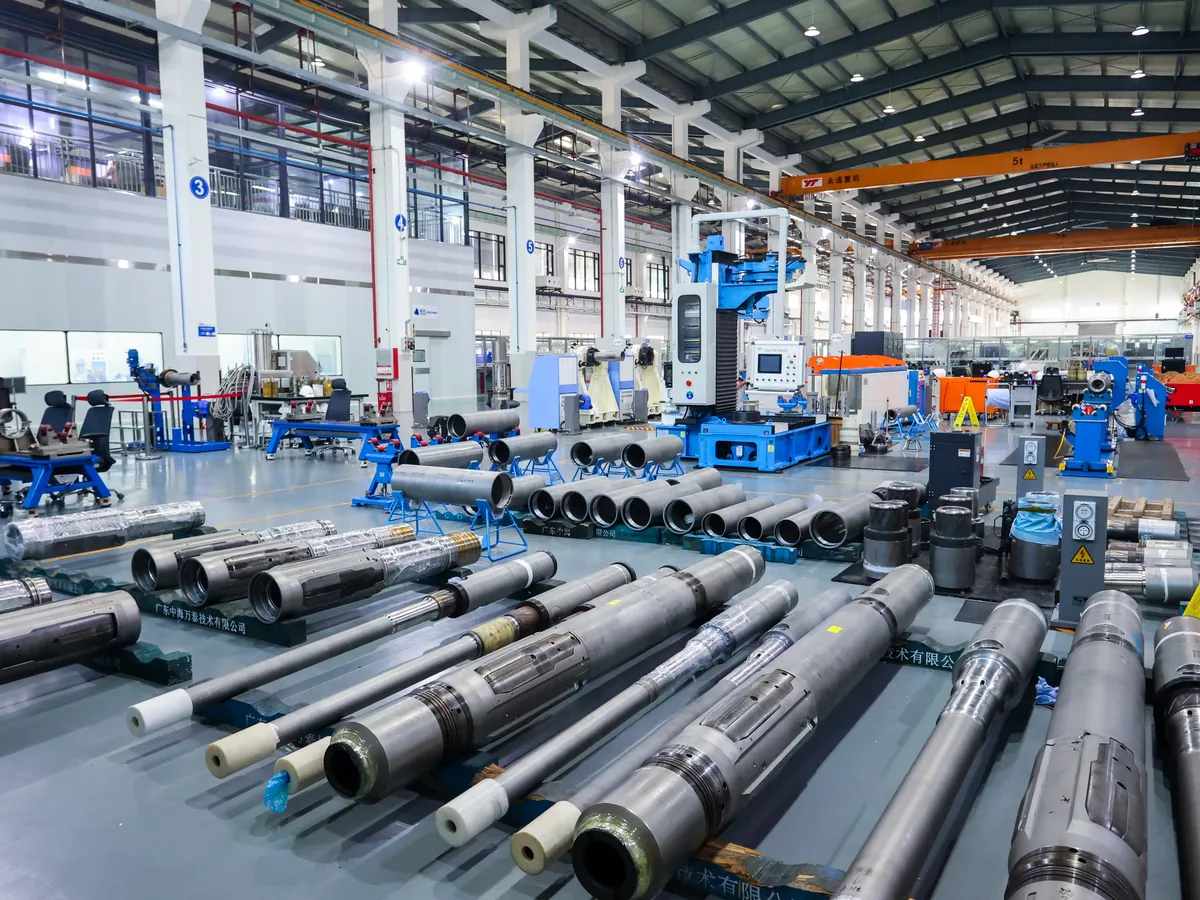
| Typical parts | Drill collars, hydraulic bodies, large shafts |
| Materials | High-strength steels, Inconel 718, non-magnetic steels, titanium |
For small, deep, precision holes — Ø2 to 40 mm, up to 6,000 mm deep, drilled from both ends on 3 m-stroke machines — we run a dedicated gun drilling line: 13 machines, all designed and built in-house, with the deepest holes going to our 7-axis FWZ-M2030B class. Fuel-system bores, hydraulic galleries, sensor passages, mold cooling channels — including the marine fuel common-rail units we have made for over two decades, each one pressure-tested at 1,450 bar against a 1,050 bar working pressure. These are the holes where the drilled surface is the final geometry. Accuracy is measured, not claimed: on production deep bores, entry-to-exit bore deviation holds within 0.3 mm per metre.
Full capability: Gun Drilling Services →
Drilling and boring establish the hole; honing finishes it. On long precision bores, honing corrects size, roundness and surface roughness over the full length. Typical work: drill collars, hydraulic-control bodies, plunger barrels, hydraulic cylinders, valve sleeves — the bores where the honed surface is the working surface.

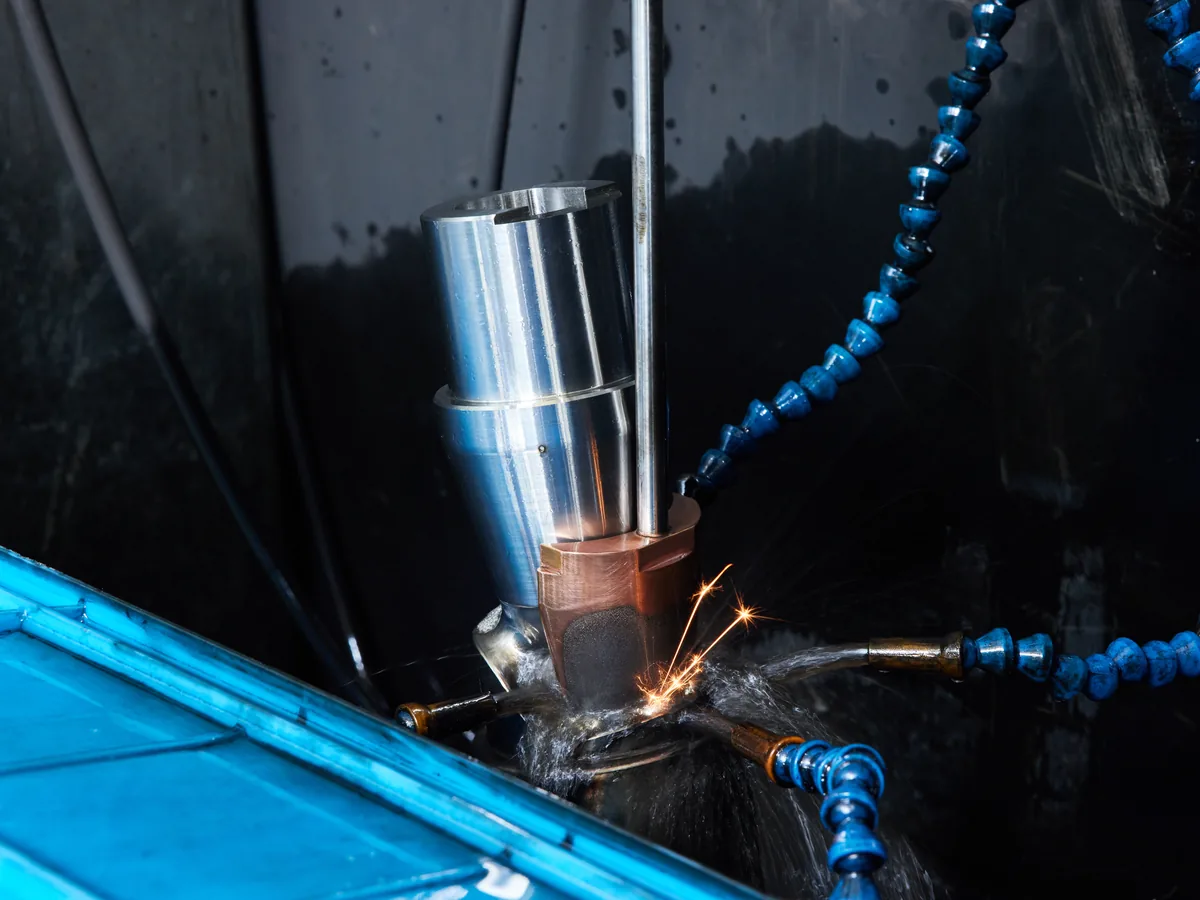
Where chip cutting stops, the spark takes over — deep-hole EDM shapes the complex cavity positions no cutting tool can reach, including on parts already hardened. Deep-hole drilling opens the bore; EDM finishes the geometry. The two run as one quoted route: hole first, then spark-erosion shaping, without leaving the deep-hole discipline.
The machine is purpose-built: a custom three-axis CNC deep-hole EDM on an integrated gantry frame, three axes simultaneous, optimised for the same difficult alloys our drills run — Inconel 718, non-magnetic stainless, and titanium.
Full capability: EDM Services →
Not sure which process your part needs? That is our job. Send the drawing — the depth-to-diameter ratio and the tolerance callouts will tell us, and we will tell you.

Deep-hole work on this floor runs two ways: gun drilling, and deep-hole drilling-boring. What separates us from most deep-hole shops: our gun-drilling machines are our own designs.
When the machining technology and the machines for large common-rail units were both closed to us, we built our own. That program produced our 7-axis CNC gun drill (FWZ-M2030B class): 6-meter drilling depth, built to crack a part no one would teach us to make. (Our big BTA line is a different story — a drilling-and-boring machine we sourced from a specialist builder, then modified in-house for complex and profiled bores; what makes it ours is three decades of process know-how run on it.)
Building the machine teaches you what buying it never can: where the vibration comes from at 6 meters, how the drill bushing wears, why the coolant chemistry matters. When your part is on our table, the people running it understand the machine all the way down — because they are the ones who put it there.
Proprietary machine models run on our floor. Full story: Custom Machine Tools →
| Industry | Deep-hole application | The record |
|---|---|---|
| Marine | Fuel common-rail units — 10+ m long, pressure-tested to 1,450 bar | First in China to break the import monopoly; certified by 7 classification societies; in service aboard China’s polar research vessel |
| Oil & Gas | Drill collars, MWD housings, hydraulic-control unit bodies | Manufacturing partner of a rotary-steerable drilling program in China |
| Hydraulics & Energy | Valve bodies, cylinder bores, accumulator barrels | Long-running production |
Straightness depends on diameter, depth, and material — tell us the three, and we will state the achievable tolerance honestly. For reference: we hold 0.5 mm/m straightness on deep drilled holes, with hole deviation within 0.8 mm over a 3,000 mm single-pass run. What we will not do is promise a number before we have seen the drawing.
Yes — they are in batch production with us. Work-hardening and spring-back in deep bores are where these alloys punish inexperience; our parameter windows were built over years of downhole and marine programs.
Both. Our 12-meter BTA line is a drilling-and-boring machine — drilling opens the hole from solid, boring makes it true. Most long parts see both operations on the same machine, in the same setup.
Yes — trepanning (solid-core removal) is available for large bores. Send the drawing and we will confirm the route for your diameter and depth.
Our BTA line runs Ø20–360 mm with 12,000 mm machine travel; Ø20–300 × 10,000 mm is the effective depth we deliver, order after order. The shop’s maximum workpiece envelope is Ø1,000 × 10,000 mm. For parts beyond that, talk to us — we built our own machines once, for exactly this kind of problem.
Yes — material supply is flexible: full-service from our stock, or machining your supplied blanks, with incoming PMI verification either way.
Upload your drawing — depth-to-diameter ratios beyond 600:1 are production work here. Within 24 hours, an engineer responds with process feedback.
Related: Capabilities Hub|Oil & Gas Drilling|Marine|Custom Machine Tools