When an engine stops at sea, there is no roadside assistance.
A main engine failure mid-ocean means tug costs, port penalties, cargo delays — and a charter party in trouble. That is why marine buyers verify the supplier first — and negotiate price second. Since 1993, we have machined the fuel injection and engine parts that keep vessels running — including the common rail units trusted in polar ice.

The parts we machine are where marine reliability is decided:
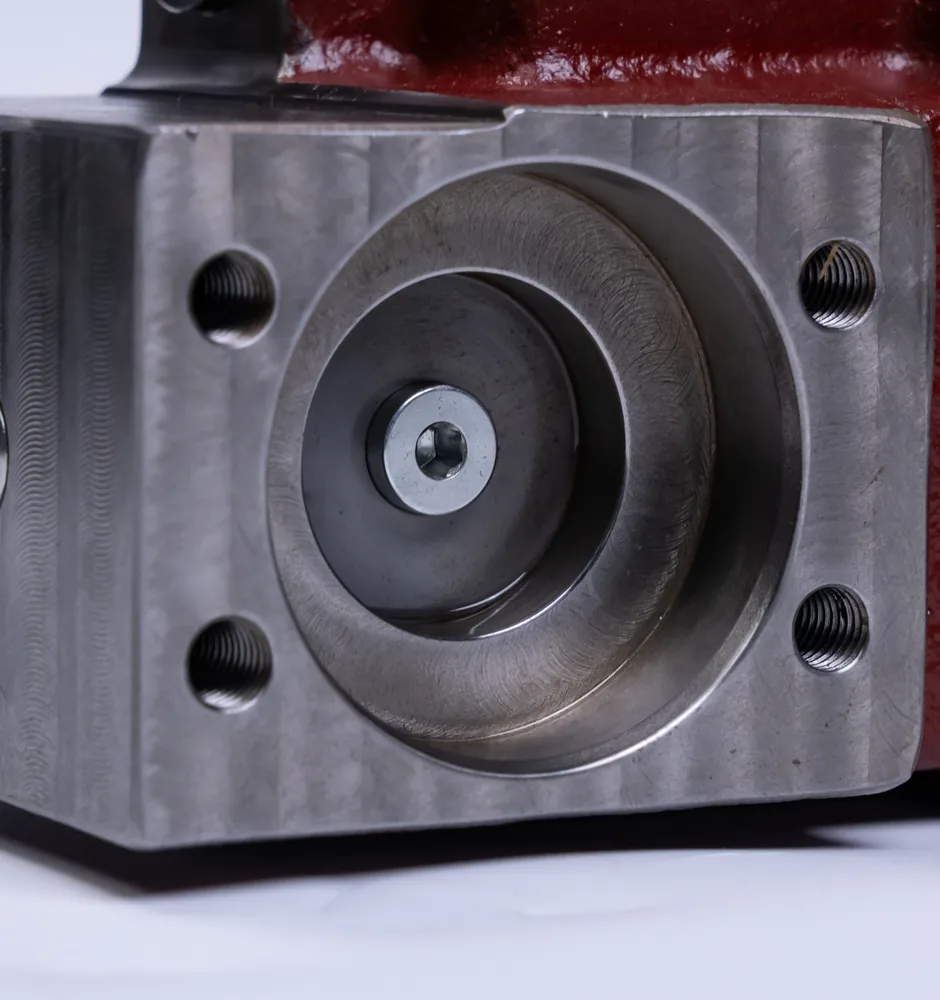
A worn plunger or a drifting injector does not stop the engine immediately; it quietly burns more fuel, then scores the cylinder, then stops the engine at the worst possible moment
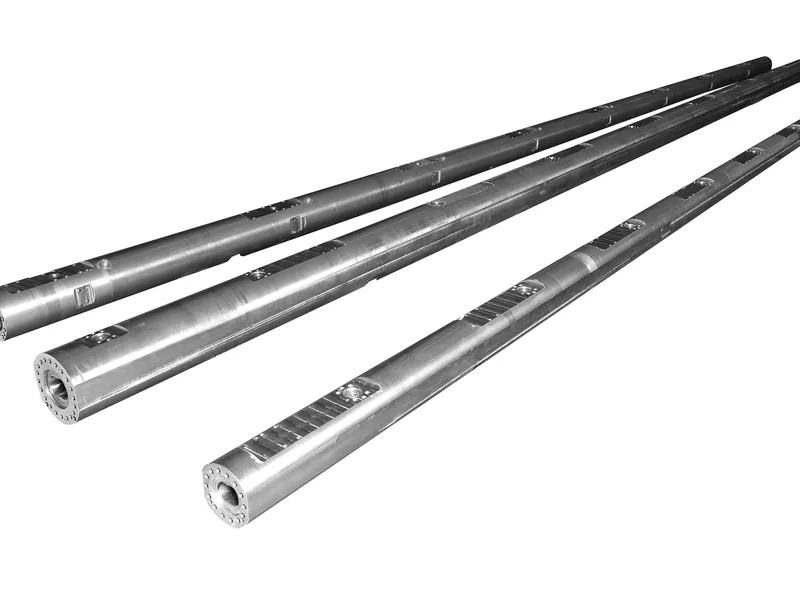
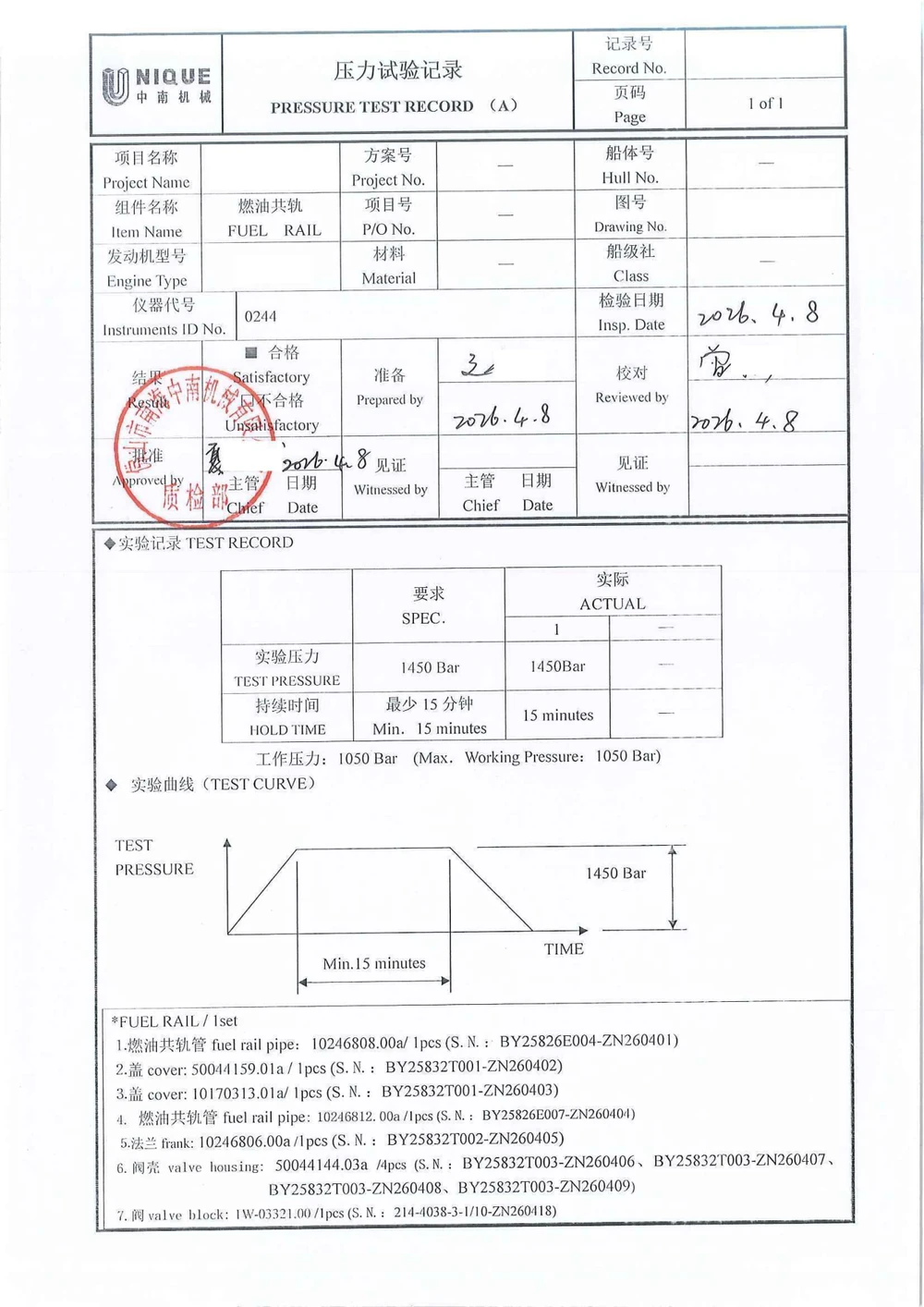
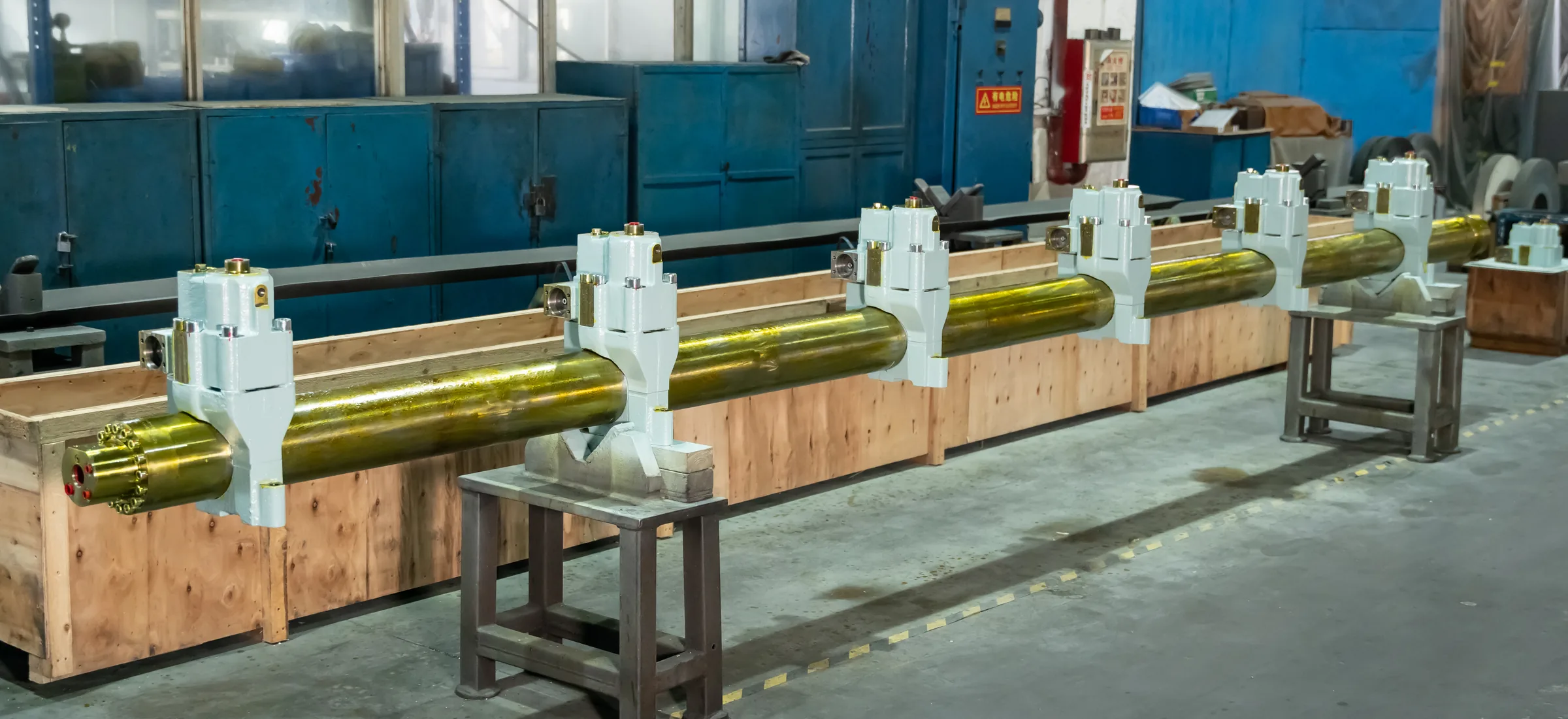
A fuel rail line over 12 metres long, in two joined sections, holding 1,050 bar working pressure (tested to 1,450 bar); valves are threaded in along its length — a single internal crack is a high-pressure fuel leak in the engine room
Wear surfaces measured in microns, expected to survive thousands of running hours between overhauls
In this industry, a part that costs a few hundred dollars — or even a few thousand — can fail into a six-figure problem. Buyers know it — and that is why they verify suppliers before they ever send a drawing.
Marine engine & fuel injection:
| Part | Why it is hard | Go to page |
|---|---|---|
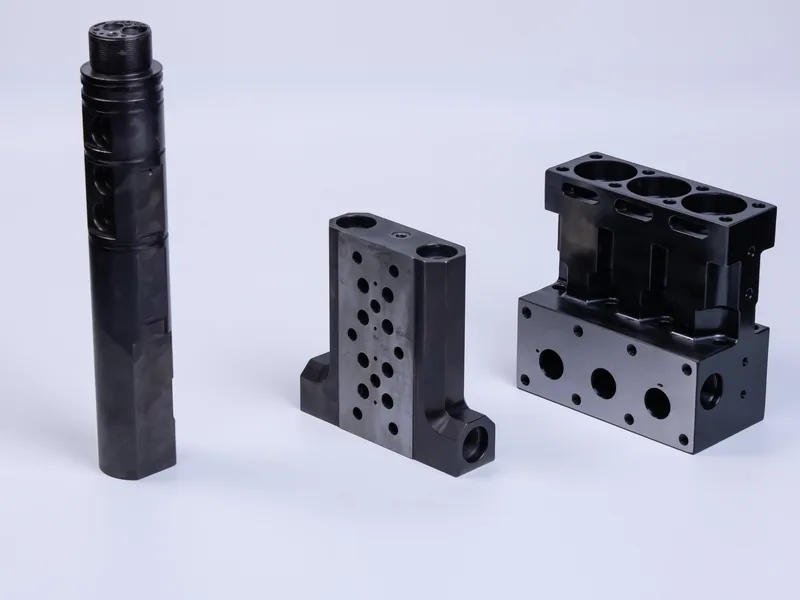
| Fuel injection parts | Micron-level plunger/barrel fits; high-pressure sealing surfaces | Parts Hub | Send drawing |
| Dual-fuel injection parts † | Methanol-resistant stainless; deep small bores; two-system geometry | Send drawing |
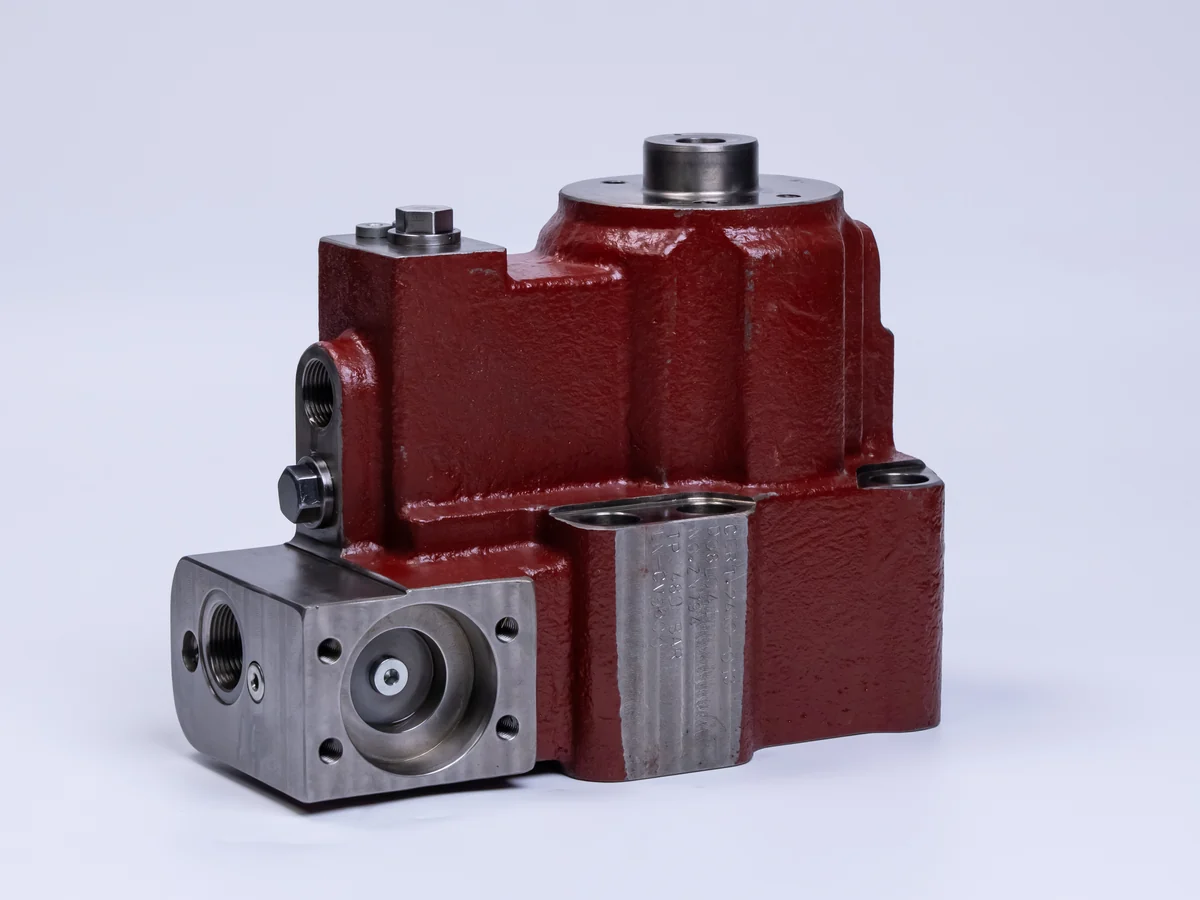
| Common rail parts | Deep precision bores over extreme lengths; 1,050 bar working-pressure integrity (1,450 bar test) | Common Rail Unit |
| Injector bodies & nozzles | Deep small-diameter holes, spray-hole geometry | Injector Nozzle Body |
| Plunger & barrel | Ra 0.4 μm mating surfaces; hardened steels | Plunger & Barrel Pairs |
| High-pressure fuel pipes | Thick-wall small-bore; fatigue under pulsation | Common Rail Pipe |
| Pistons & cylinder liners | Large-bore machining; wear-resistant surfaces | Parts Hub | Send drawing |
| Engine spare parts | Dimensionally compatible replacements, made to print or sample | Spare Parts & MRO | Send drawing |
† Dual-fuel methanol parts: proven process capability — corrosion-resistant stainless, deep small bores, high-pressure sealing — the same process family as our certified fuel-system parts.
This list is where our record is deepest — not the limit of what we take on. Marine parts reach us as drawings and tolerances rather than part names: if precision is what makes the part difficult, send the drawing and we will quote the process.
Between 38% and 50% of new vessel orders by tonnage are now alternative-fuel ships. Every dual-fuel engine keeps its diesel pilot injection system — and adds a second, high-pressure injection system for methanol or LNG. For parts buyers, that means two things:
Two injection systems where there used to be one — rails, injectors, valves, high-pressure pipes. The value of injection and supply-system parts per engine roughly doubles.
Methanol is corrosive. WinGD’s technical documentation requires corrosion-resistant stainless steel for all methanol-contact components — and stainless deep-hole machining is one of the hardest process combinations in the industry.
We machine this material family every day: high-nitrogen austenitic and non-magnetic stainless steels (P550, 15-15HS MAX — in batch production on our JV lines), precipitation-hardening 17-4PH, Stellite sealing surfaces, and nickel alloys such as Inconel 718. The corrosion-resistant stainless grades that methanol service requires sit squarely within this process family. The material shift that worries the market is the work we already do.

Marine buyers verify certificates, not logos. Here is what you can check:
Our common rail units are certified by seven classification societies (BV, ABS, CCS, DNV, NK, RINA, LR)
Certificate No. 01 100 019813, certified since 2002, continuously maintained
Long-term supply of critical parts for marine engines built under license from leading European and Japanese engine designers
From material heat number to final inspection report, with machining, heat treatment, and coating capability all under one roof
A vessel waiting on a spare part burns money at anchor. OEM spares can carry 50–150% price premiums and multi-week lead times — and for legacy engines, some parts are simply discontinued.
We manufacture dimensionally compatible replacement parts to your drawings or your worn samples:
Send the print; we confirm manufacturability and tell you exactly what we need for an accurate quote
Send the failed part; we reverse-engineer dimensions, verify material by spectrometric analysis (PMI), and manufacture to match
EN 10204 3.1 material certificates and full inspection reports shipped with every part
Beyond new parts: worn sleeves and sealing faces can be rebuilt by HVOF spray or overlay welding and re-machined to size — faster than waiting for a new OEM part, at a fraction of its cost.
Every spare part we ship carries the same process discipline as our OEM-program parts — with machining, heat treatment, coating and inspection capability under one roof, backed by seven classification society certifications.


The common rail unit that ended the reliance on imports.
When China licensed a European electronically controlled common-rail marine engine, the drawings existed — but for two years, no one could manufacture the common rail unit. The know-how was not part of the license.
We took it on. Months of round-the-clock work to crack the core process; three years to localize both the technology and the machines. The result: in 2006, the first China-made marine common rail unit — later certified by seven classification societies and installed aboard China’s polar research vessel.
That project taught us something we still build on: when neither the part nor the machine is available domestically, experience is the only way in.
That project is not a museum piece. Large marine diesel common-rail pipes (40CrNiMoA high-strength Cr-Ni-Mo steel) are in batch production today — every set shipped with a full traceability package: material tracking tables, dimensional examination records, MPI reports to IACS Rec. No.68, and pressure-test records at 1,450 bar against a 1,050 bar working pressure.
“They told us what to make, but not how to make it. We decided to figure it out anyway.”— Mao Weidong, Executive Deputy GM

We have supplied critical fuel-injection and engine components to marine engine programs for over two decades. Classification society certificates are available on request — seven societies: BV, ABS, CCS, DNV, NK, RINA and LR.
Yes. WinGD technical documentation requires corrosion-resistant stainless for methanol-contact parts — and that material family is our daily work: high-nitrogen austenitic and non-magnetic stainless steels (P550, 15-15HS MAX), 17-4PH, Stellite and Inconel alloys, with stainless deep-hole machining as one of our core processes. Send the drawing; our engineers will confirm material and process feasibility.
Yes — dimensionally compatible parts manufactured to your drawings or samples, with material certificates and inspection reports. This covers legacy engines where OEM spares are slow or discontinued.
For urgent cases — a vessel waiting at anchorage — contact us directly on WhatsApp with the drawing or photos of the failed part. We will come back quickly on whether we can make it and how fast.
Yes. Backup gensets for data centers run on the same medium-speed engine family as marine propulsion — our fuel injection and engine part capabilities transfer directly. As AI data centers multiply, so does genset demand. We wrote an engineering note on exactly this: Data Center Backup Gensets Run on Marine-Derived Engines →
Turning to Ø800 × 8,000 mm; plant-wide workpiece envelope to Ø1,000 × 10,000 mm. Deep-hole drilling: 12 m machine envelope, 10 m effective depth — from Ø3 mm gun drilling up. Send your largest part — we will confirm the fit.
Machining, coating and heat-treatment capability under one roof — hard chrome, electroless nickel, nitriding, vacuum hardening to 1,250°C. One quality system, one lead time.
New parts & production programs — upload your drawing. You will hear from an engineer — with manufacturability feedback, material advice, and the information we need for an accurate quote.
Urgent spare part? — message us on WhatsApp with the drawing or a photo of the failed part; we will come back quickly on feasibility and lead time.
Related: Why Zhongnan|Quality & Certifications