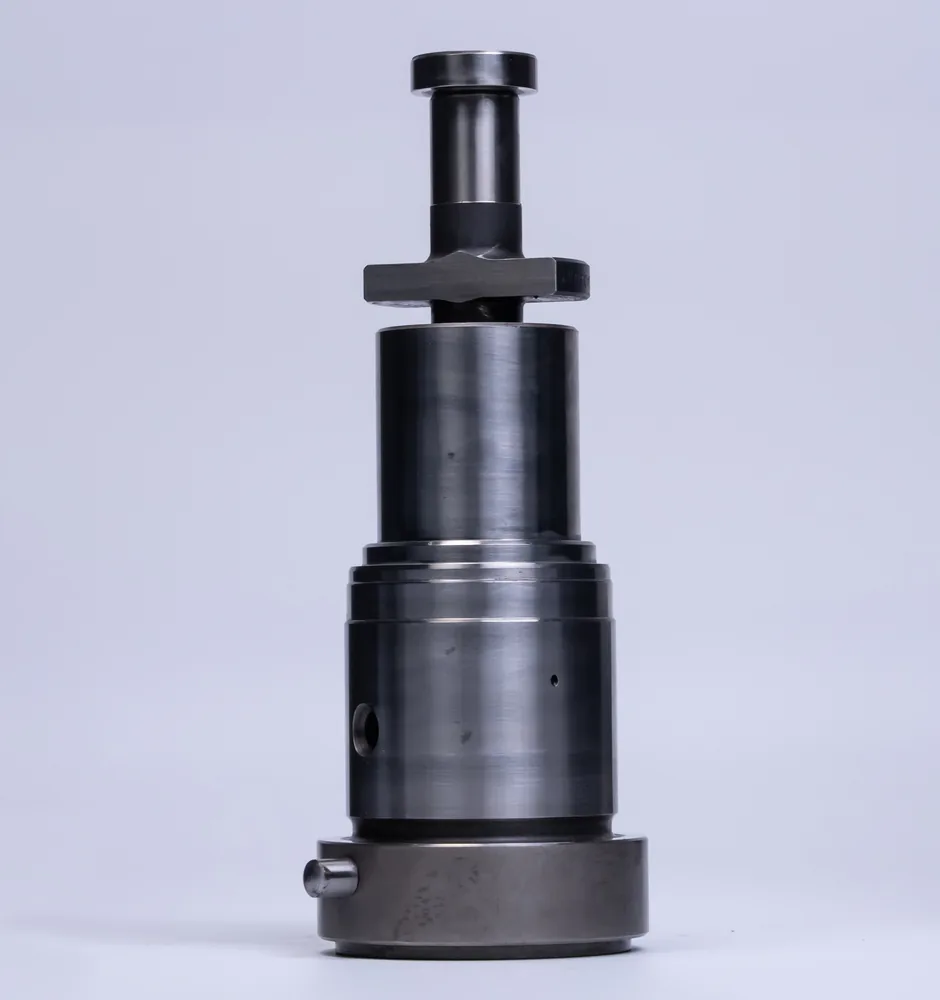
Non-magnetic drill collars in batch production — deep bores production-proven to 10,000 mm (machine envelope 12,000 mm), straightness 0.5 mm/m, permeability verified on every heat. Built for 180 °C / 180 MPa downhole service. Upload your drawing via the RFQ form — an engineer replies within 24 hours.

P550 and 15-15-class grades are high-nitrogen austenitic stainless alloys. They are chosen for one reason — staying magnetically invisible around MWD/LWD sensors — and they are feared for another: spring-back in deep bores.
These alloys store elastic energy as they are cut. The tool passes, the bore measures in tolerance at the machine — and then the material relaxes. Stress redistributes, the bore drifts, and a 10-meter hole that was good warm can be out of tolerance by the time it cools. Controlling it is not one clever setting — it is stress-managed sequencing, symmetric material removal, intermediate stabilization, and a route written by people who have watched a bore move and learned why.
On top of that, these austenitic grades work-harden like their nickel-alloy cousins: rub them with a dull tool and the surface hardens mid-cut. Spring-back plus work-hardening, in a 10-meter hole — that is the exam question. We pass it in production, not in a brochure.

Spring-back and work-hardening are not a P550 quirk — they scale with the material. On a relative machining-difficulty scale (carbon steel = 1.00, higher means harder), here is where P550 and 15-15-class grades sit against the alloys we run every day:
Relative machining-difficulty coefficient — carbon steel = 1.00, higher means harder to machine.
P550 sits at 3.47 — about three and a half times the cutting resistance of carbon steel, and in the same league as titanium. That number is the reason deep bores spring back: the harder the material pushes back, the more the process has to manage stress instead of simply cutting it away.
| Process | Envelope / range | Notes |
|---|---|---|
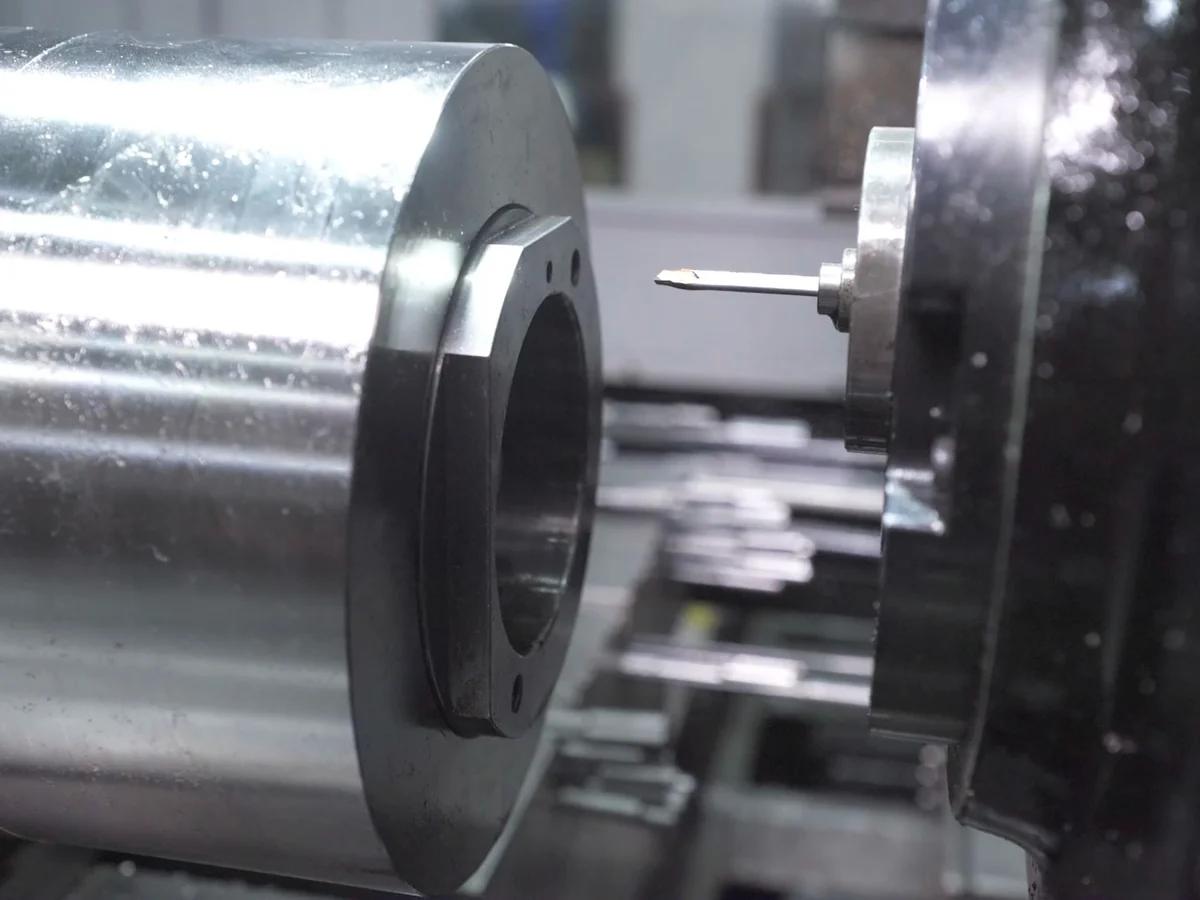
| Deep-hole drilling (BTA) | Ø20–360 mm; machine envelope 12,000 mm; production-proven Ø20–300 × 10,000 mm | Straightness 0.5 mm/m; deviation within 0.8 mm over a 3,000 mm single-pass run |
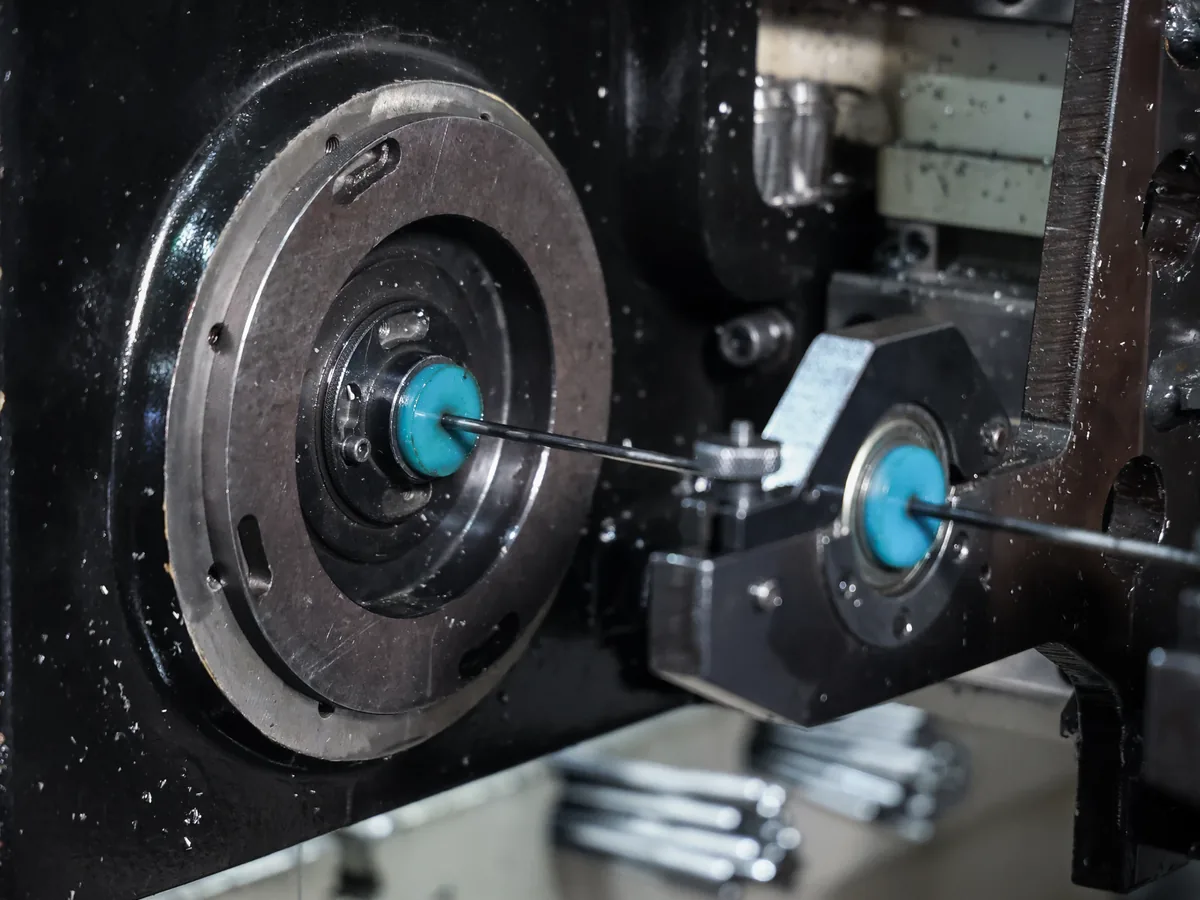
| Gun drilling | Ø2–40 mm, depths to 6,000 mm; ±0.02 mm, Ra 1.6 μm | 13 machines, all designed and built in-house |
| Deep-hole honing | Bores Ø100–400 mm, lengths to 6,000 mm (four FWHM-4000, self-built) | Corrects size and roundness over full length |
| CNC turning | To Ø800 × 8,000 mm (FWT-80800); shop envelope Ø1,000 × 10,000 mm | Slender shafts to 4,500 mm handled daily — steady rests, sequence planning, stress management |
| Precision grinding | Cylindrical to φ500 × 3,000 mm (MQ1350B), φ125 × 500 mm (MGB1412); internal φ200 × 250 mm (×2, Swedish) | To 0.005 mm, finishes to Ra 0.4 μm |
| Welding | Narrow-gap butt welding of non-magnetic steels (groove angle within 2°, depth to 60 mm); TIG and laser welding of P550 / 15-15-class alloys | In-house repair and fabrication |
| Threading & gauges | API thread gauge suite: REG / NC / FH profiles — 24 gauges + 64 setting plugs | API Spec Q1 / 7-1 / 7-2 licenses held by our JV Zhonghai Wantai |
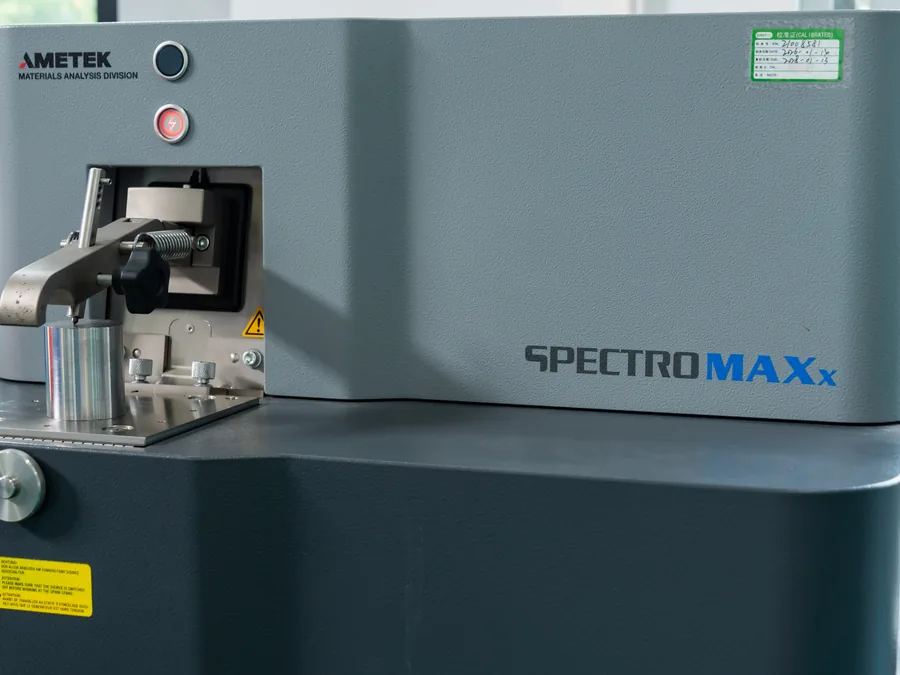
| Verification | Non-magnetic calibration range (all-wooden, magnetometer-monitored) via JV; PMI by optical emission spectrometer | Permeability verified, chemistry verified |
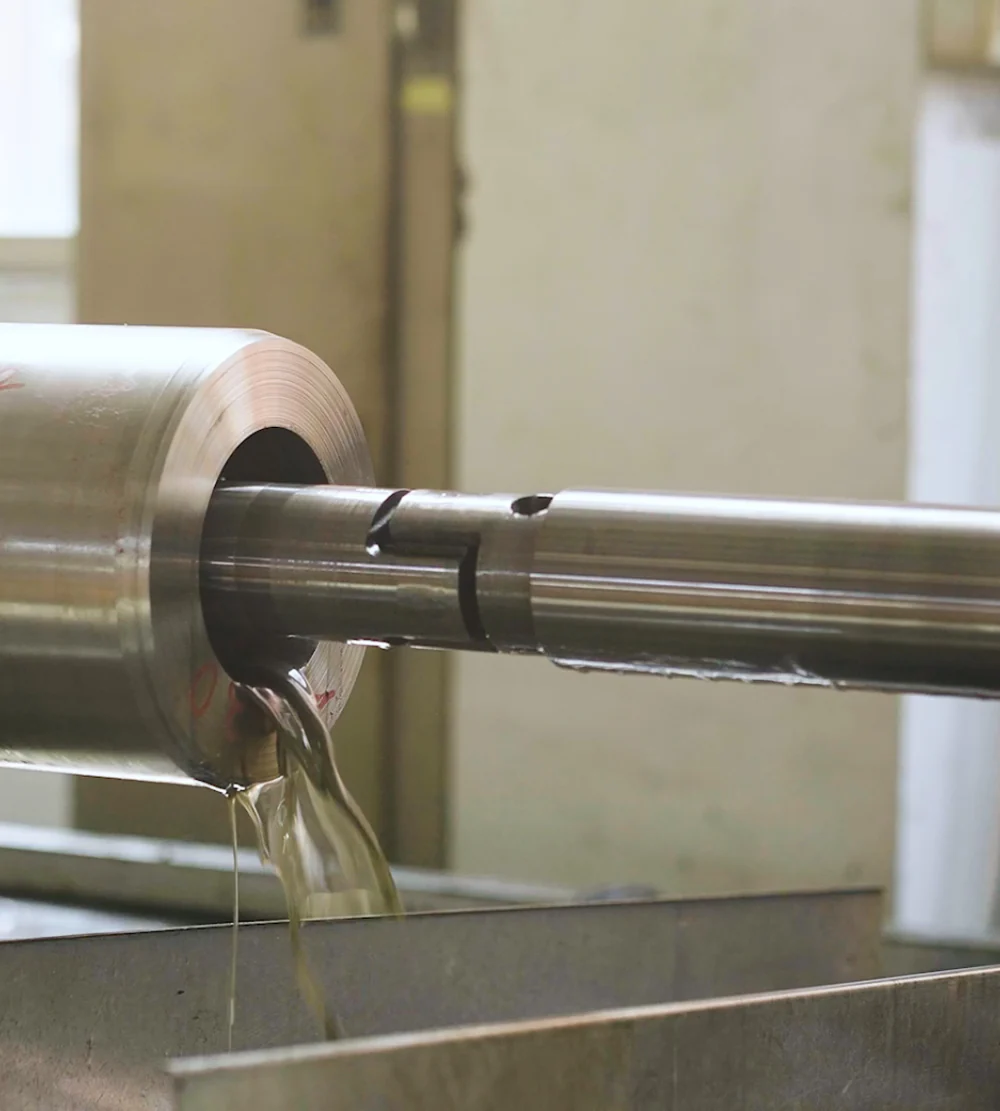
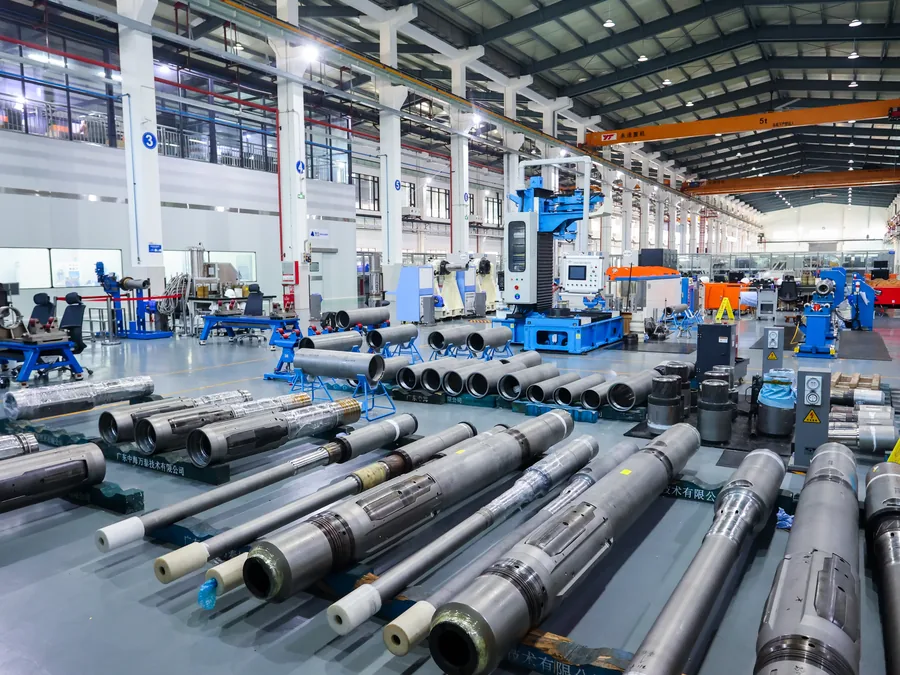
Non-magnetic drill collars in batch production. P550 collars — including instrumented variants for MWD spacing — run in batch quantities on our Drill Collars line; 15-15-class non-magnetic drilling components run alongside them. To our knowledge we are one of the few shops in China with this record — and we say “few” because we can only speak for what we have verified.
Why permeability control matters. MWD/LWD tools navigate by magnetometer and measure the formation by electromagnetic signal. A collar with stray magnetic signature distorts the compass reading — the tool stops knowing where it is. That is why permeability is not a paperwork item here: incoming material is verified by PMI, and magnetic performance is checked on a non-magnetic calibration range — all-wooden, magnetometer-monitored — available through our JV.
Proven in the service envelope. The offshore downhole tools we supply components for operate at 180 °C / 180 MPa, proven in sustained field operation. Our JV Zhonghai Wantai holds API Spec Q1, API 7-1 and API 7-2 licenses.


Speeds and feeds are earned per part and frozen into the routing. The doctrine we can share:
Bore and OD allowances balanced so residual stress relaxes toward straight, not toward scrap
The route pauses to let the material settle before the finishing passes, because a bore that moves after the tool is a scheduling problem as much as a cutting problem
No dwelling, no rubbing; in austenitic grades a worn edge manufactures a hardened skin
Critical bores checked cold, because “in tolerance at the machine” is only half the sentence
REG / NC / FH profiles verified against calibrated setting plugs

The alloy is chosen for a magnetic property — so the paperwork is part of the part:
Mill origin follows the collar through every operation to the inspection report
Optical emission spectrometry on every incoming heat (50+ elements, including nitrogen, which defines these grades); no certificate taken at face value
Tensile and impact testing on incoming material
Mill certs, dimensional reports, permeability verification; third-party inspection accepted and confirmed in writing before production starts. NACE MR0175 requirements supported where specified
Material is procured against your permeability specification, verified by PMI on arrival, and magnetic performance is checked on the JV’s non-magnetic calibration range. State your requirement on the drawing — we verify against it, not against a brochure value.
Deep bores are production-proven to 10,000 mm; the machine envelope extends to 12,000 mm. OD turning runs to Ø800 × 8,000 mm, with slender sections to 4,500 mm handled daily.
Both are high-nitrogen non-magnetic austenitic alloys in our daily mix — P550 leads drill-collar volume, 15-15-class grades run in drilling components. Both carry the same traceability and verification discipline.
Yes — narrow-gap welding of non-magnetic steels (groove angle within 2°, depth to 60 mm) and TIG/laser welding of P550 and 15-15-class alloys are in-house processes, followed by re-machining and re-verification.
REG / NC / FH thread profiles are verified against a 24-piece API gauge suite with 64 setting plugs; API Spec Q1, 7-1 and 7-2 licenses are held by our JV Zhonghai Wantai.
Attach the drawing and the material spec, including your permeability requirement; an engineer replies within 24 hours. NDA welcome.
Related: Drill Collars|Oil & Gas|Deep-Hole Drilling|All materials

Trademark notice: P550 is a registered trademark of voestalpine Böhler. It is used on this page solely to describe the class of material we machine; no affiliation or endorsement is implied.