The shipyard had the licence and the drawings. What it did not have was a shop that could cut the part.
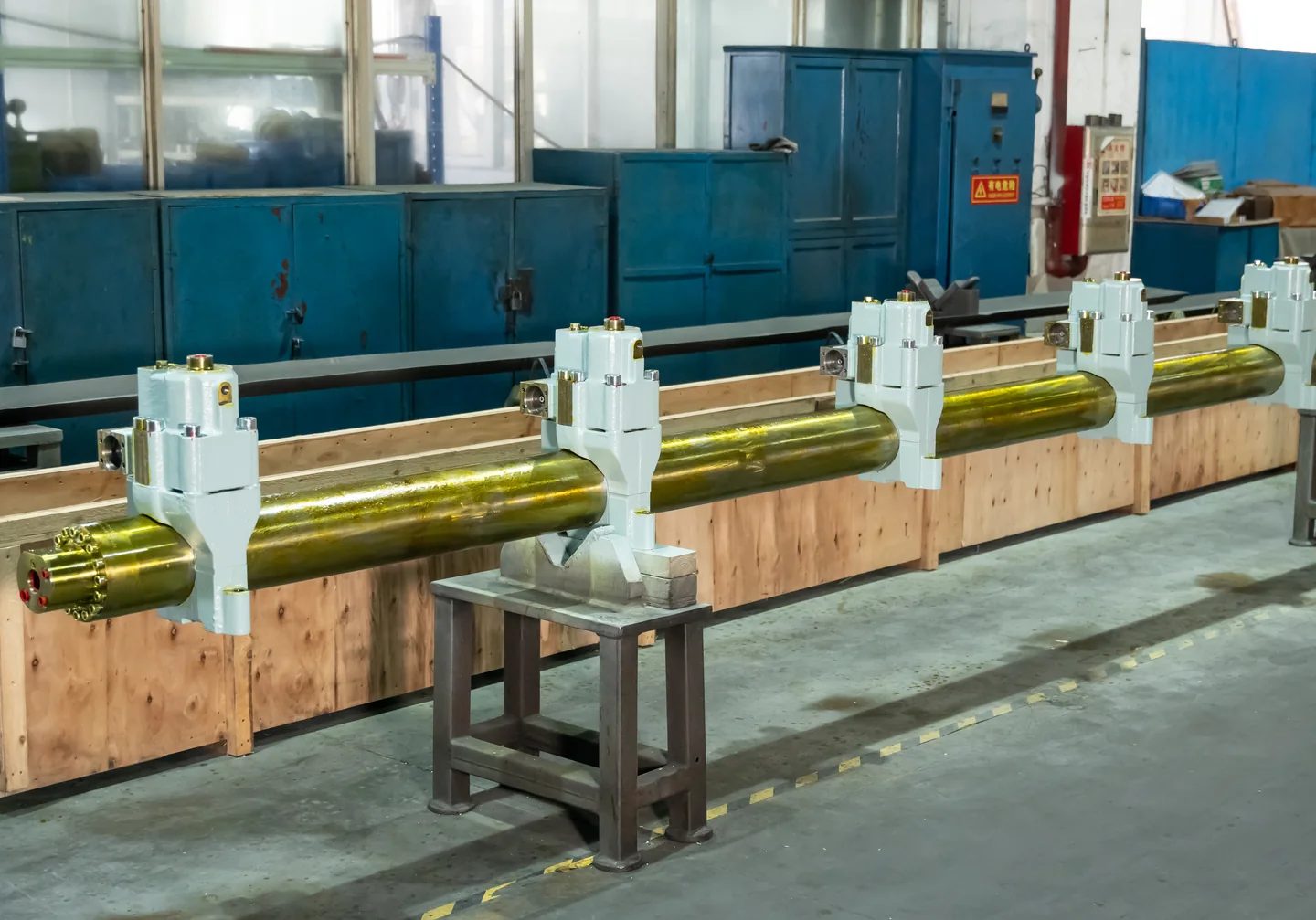
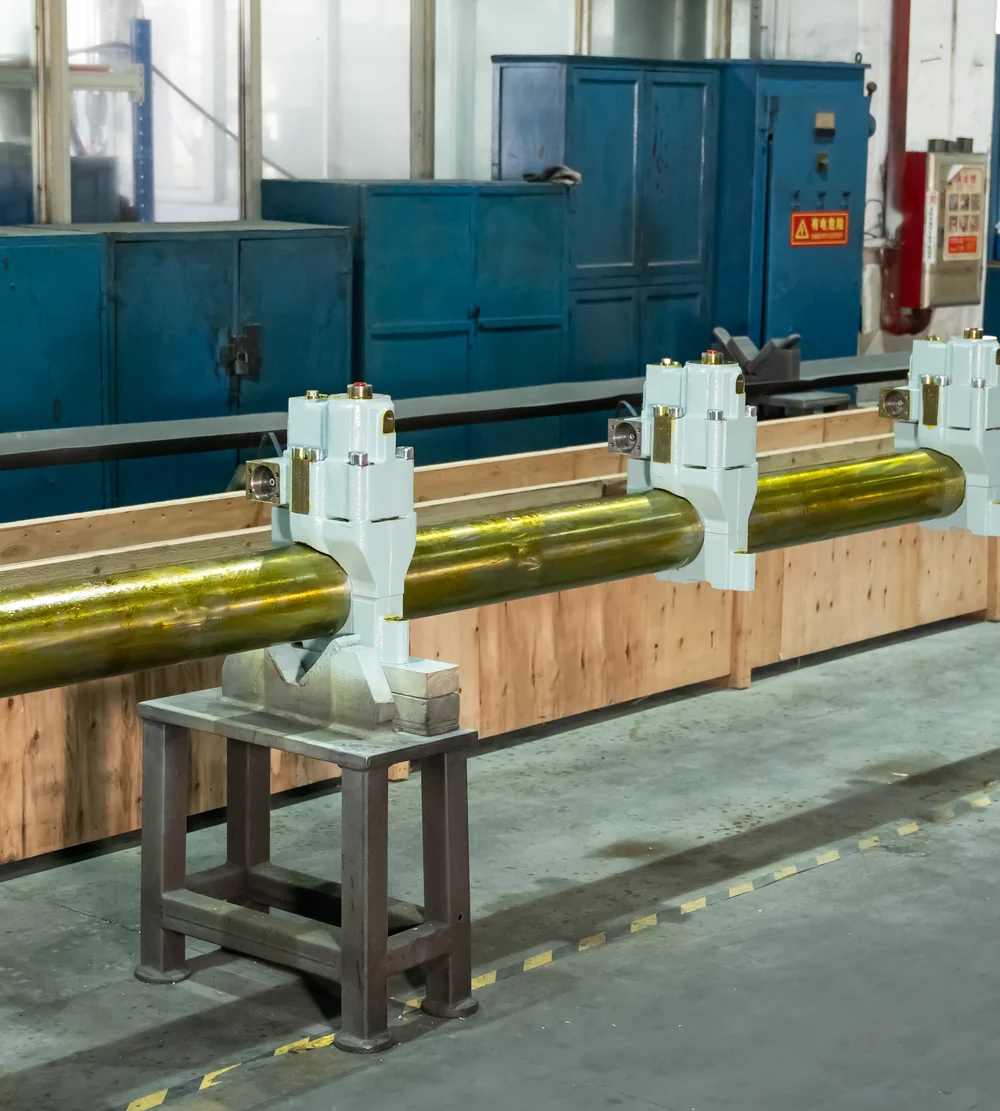
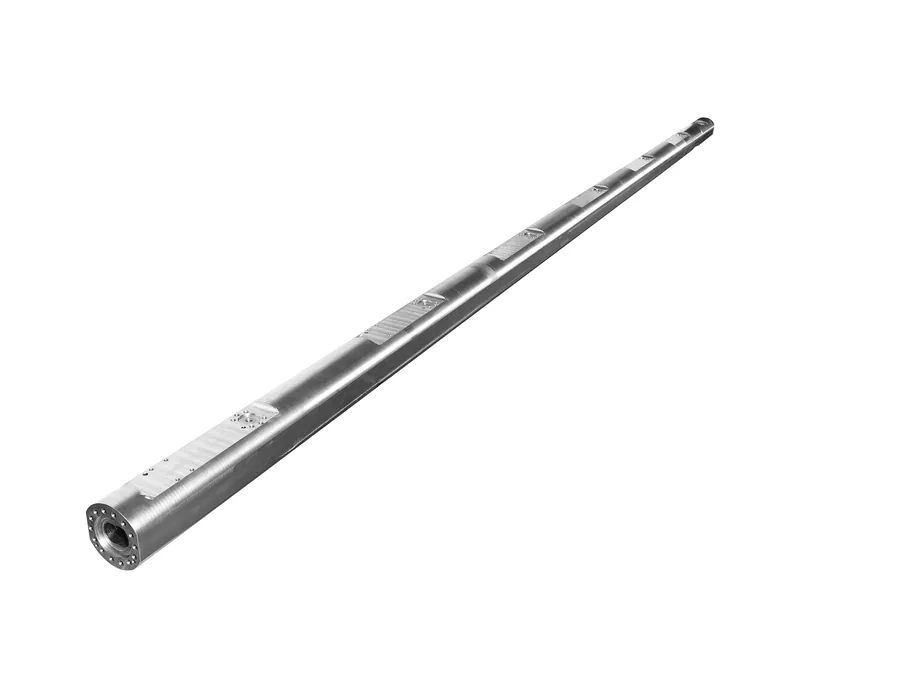
A 12-metre fuel rail, working pressure 1,050 bar and tested to 1,450 bar, with fits measured in single microns. Certified by seven classification societies, in service since 2012 aboard China’s polar research vessel.

In 2003, a leading Chinese shipyard licensed electronically controlled common-rail diesel technology from a European marine engine maker. The shipyard had the drawings. For two years, nobody in China could machine the fuel unit.
The problem was not the drawings. It was the combination: ten metres of high-strength steel, deep precision bores over that length, and sealing faces that had to hold 1,050 bar cycle after cycle. The available machines could not hold the length. The available tools could not survive the depth. The technology was not available domestically, and the parts had to be imported.

If the machine could not do it, we rebuilt the machine. If the cutting tool could not, we redesigned it.
A ten-metre capability that did not exist on the market had to be built rather than bought. That decision is why the company still designs and builds its own machine tools
Deep precision bores over extreme lengths became a routing question, not a single operation: BTA drilling, then precision boring, then honing for the surface that holds the seal
Where the catalogue had nothing that survived the depth, the tool was redesigned until it did
The key technologies fell after months of round-the-clock work. Mastering them took longer than inventing them.
The first China-made marine common rail units, ending the reliance on imports
The units entered service aboard China’s polar research vessel
ABS, BV, CCS, DNV, LR, NK and RINA have certified our marine components
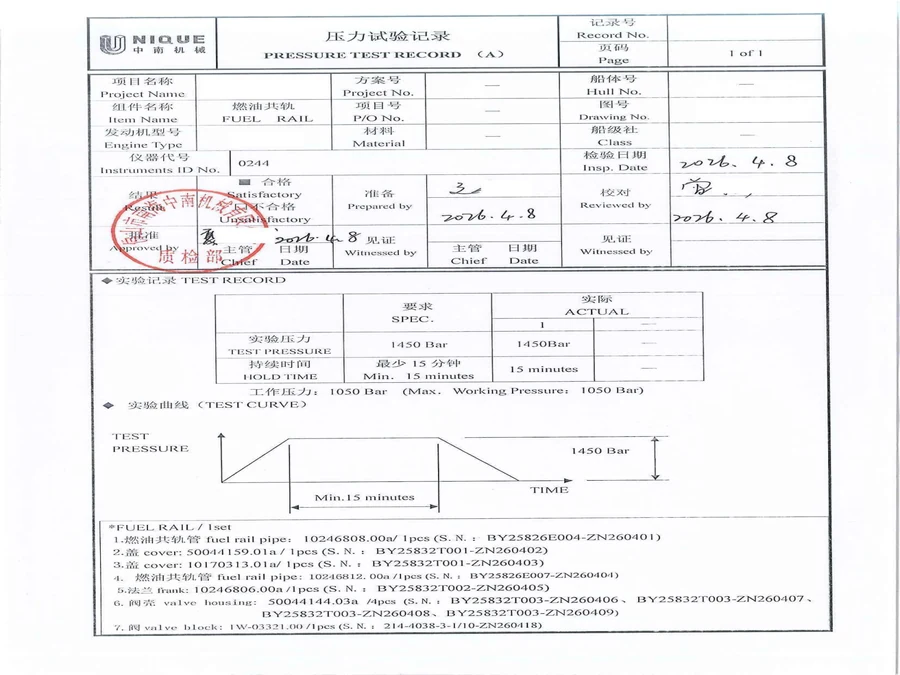
The longest servo common rail pipe in the family, machined from 40CrNiMoA, working pressure 1,050 bar, pressure-tested to 1,450 bar with a 15-minute hold
The clearance band held by the plunger and barrel pairs that sit inside these units, with roundness within 3 μm
The document packages shipped with two recent orders, months apart: material traceability tables linking every part number to its mill certificate and heat number, EN 10204 3.1 certificates for every forging, and magnetic particle examination records
That program is not history. It is the reason the rest of this site can make the claims it makes.
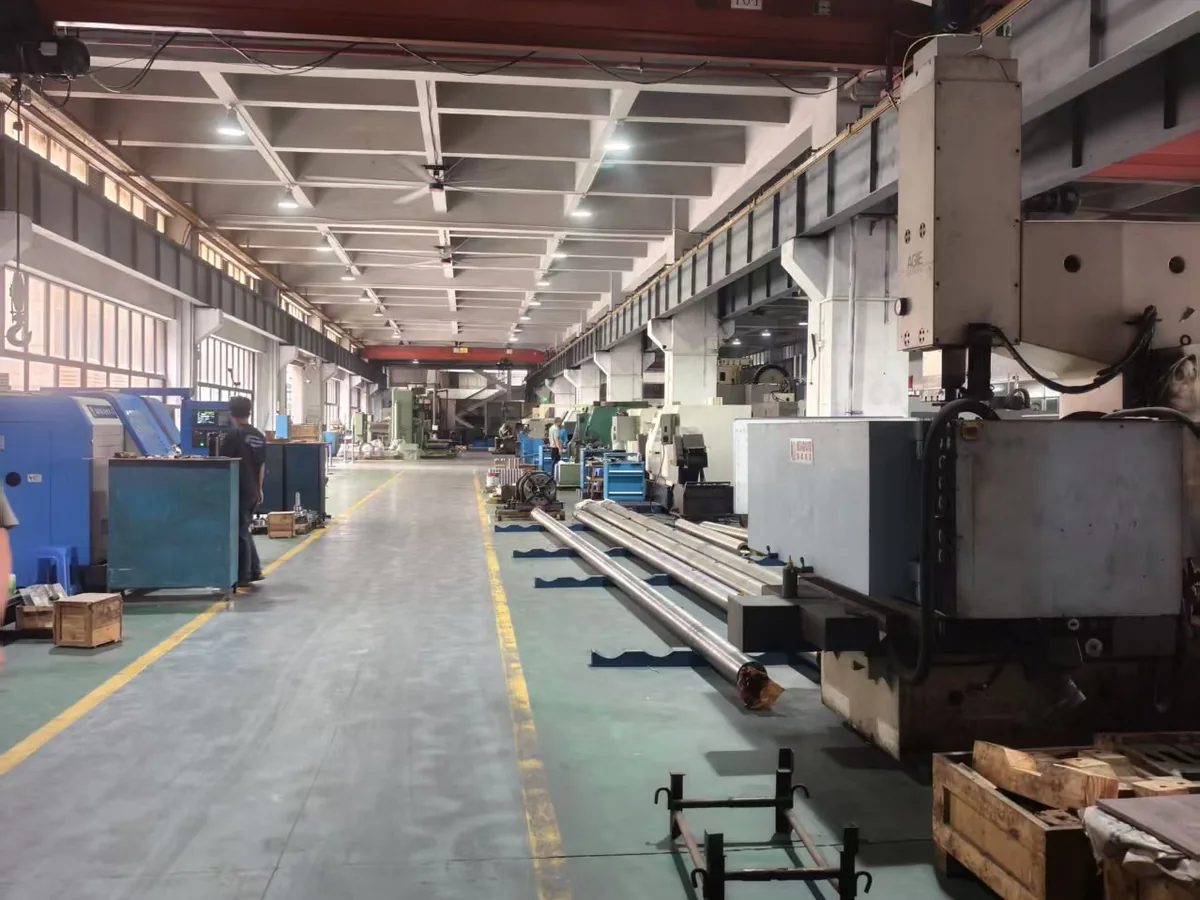
The chain that had to be built in 2003 — drilling, boring, honing, heat treatment, coating, pressure testing, metrology — is the same chain that runs today. It is the capability that carries a part from raw material to finished surface in-house
The ten-metre problem created a habit: when a critical process needs a machine nobody will sell us, we design and build it
The same fits and the same documentation standard now run through oil & gas, aerospace and robotics work
The pressure-holding core of the system: common rail pipes, injector bodies and valve bodies — plus servo-oil rails, relief-valve housings, exhaust-valve driver blocks and pistons, down to the high-speed-steel valve needles.
1,050 bar working pressure, tested to 1,450 bar with a 15-minute hold. The pressure-test record ships with the part.
Yes. Marine orders run under seven classification societies: ABS, BV, CCS, DNV, LR, NK and RINA. Tell us which society your project calls out and we will confirm the route.
Yes — the program has been in continuous production since 2006, and the documentation standard has only tightened since. An April 2026 lot of 40CrNiMoA rail pipes completed 1,450 bar pressure testing with the full traceability package; an October 2026 lot followed, shipping with a 63-page documentation package.
Upload your drawing via the RFQ form — an engineer replies within 24 hours with manufacturability feedback and a calculated quotation.
Related: Marine Industry|Deep Hole Drilling