Building machines is not the point. It is a symptom.
When a part cannot be made on any machine you can buy, a shop has three options: decline it, subcontract it, or build the machine. This note is about the third — what class of part forces that decision, and how a buyer should read it.

In practice it is not ambition that produces a machine-building shop. It is four specific situations, and a buyer can check their own part against them:
| The part is… | What breaks | What it looks like |
|---|---|---|
| Bigger than the catalogue | The envelope itself. No stock machine travels far enough or swings a large enough diameter | Long shafts and housings measured in metres rather than millimetres |
| Longer than the catalogue | The ratio. Past a certain length-to-diameter, the tool’s own weight and the cutting forces walk the bore off line, and no stock machine of the required envelope holds it | Deep bores at extreme ratios — the hole is the problem, not the part size |
| Harder than the catalogue | Rigidity and thermal behaviour. In superalloys, non-magnetic grades and titanium, machine deflection that would be invisible in mild steel becomes a dimensional error | Superalloy and non-magnetic work held to tight tolerance over long features |
| Impossible for the catalogue | Reach. A rotating cutter cannot enter an internal cavity, follow a curved channel or leave a sharp internal corner — no amount of machine size fixes geometry | Internal cavities, curved flow channels, cross-holes, sharp internal corners |
If your part sits in one of these four rows, you are not looking for a shop with a bigger catalogue. You are looking for a shop that has already met the wall.
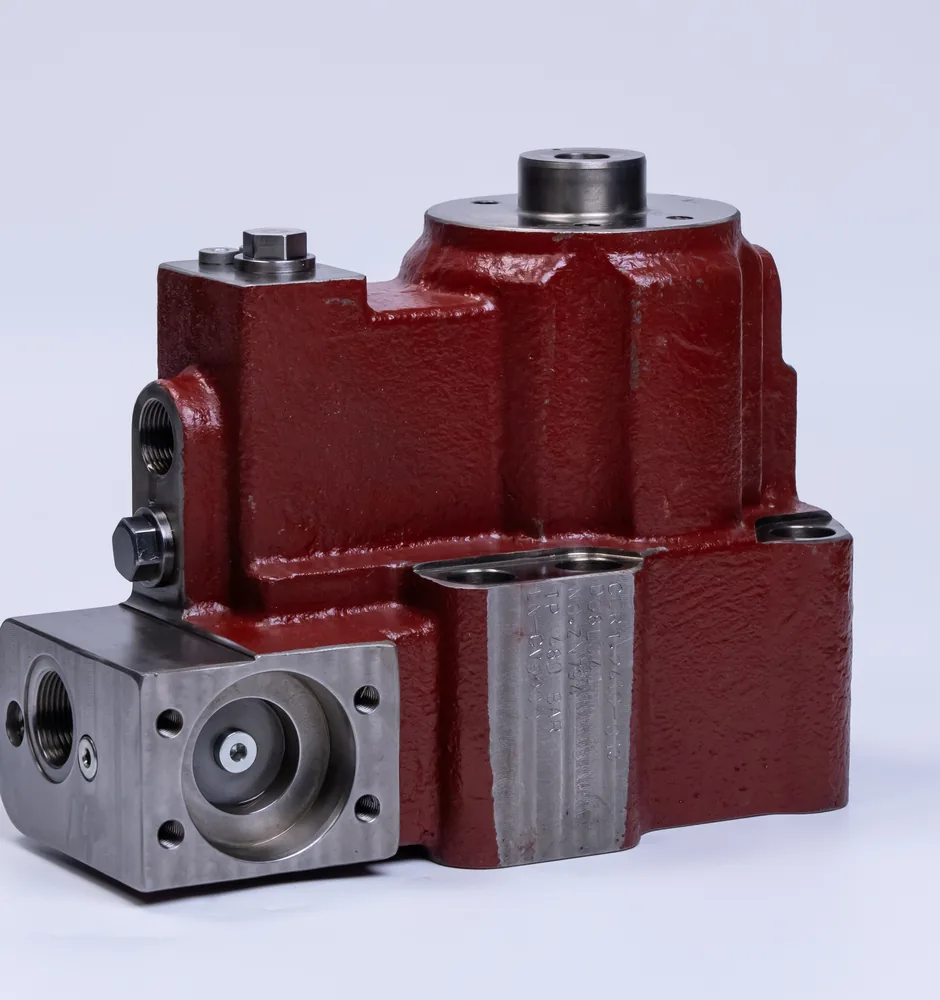
The history is short and specific. In the early 2000s, the large components for marine engines — common-rail units, cylinder blocks, cylinder heads — could only be sourced from a handful of foreign suppliers. The machining technology was closed, and the parts were imported.
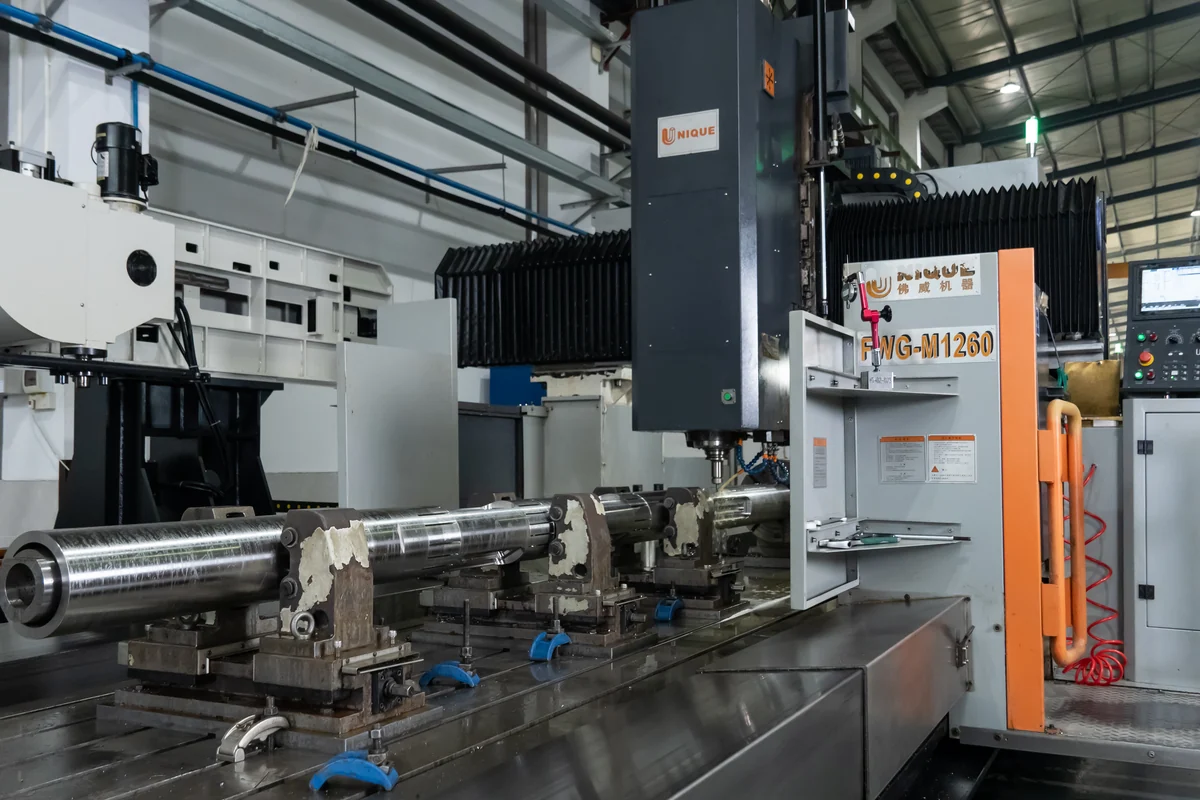
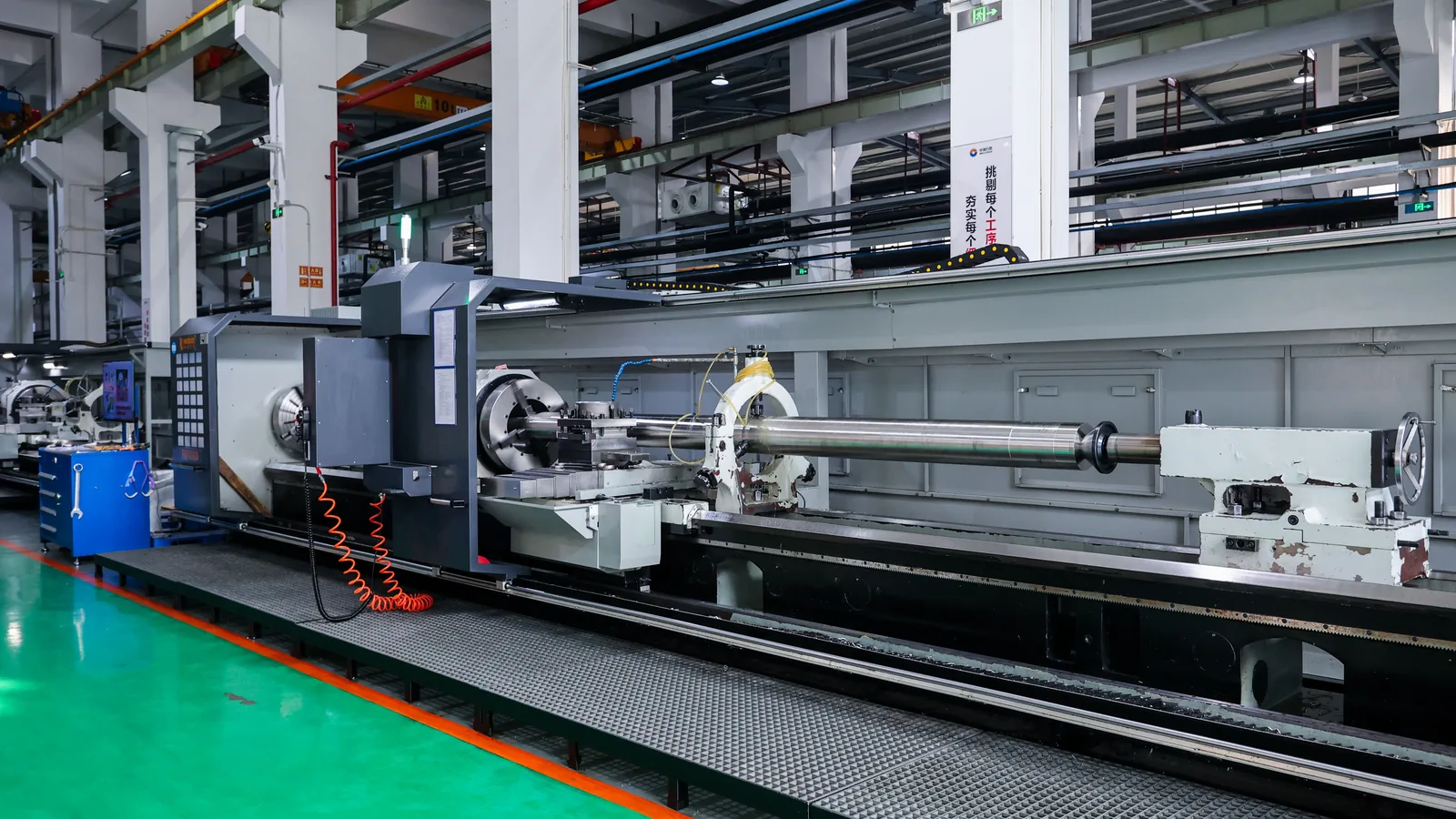
“We developed a 12-metre-travel five-axis gantry machining centre, an 8-metre-travel CNC lathe, and a 7-axis 3-metre deep-hole CNC drill — solving the chokepoint machining problems of key engine parts.”— Xu Guan, Founder
No machine on the market could make those parts, so the machine came first and the part followed. In 2006 the first China-made marine common-rail units ended the reliance on imports, and the machine-building capability has never left the company since.
The clearest single example is a gun drill. Ultra-long gun-drilled holes in large workpieces run into a wall: past a certain length-to-diameter ratio, the drill’s own weight and the cutting forces walk the hole off line, and no stock machine of the required envelope would hold it. The answer was a machine with a combined drilling-and-milling architecture and a long-nose spindle, with a front steady rest establishing a guide bore before the spindle takes over. Deep holes at extreme ratios, held straight — and the same support philosophy later scaled into a 7-axis class with 6,000 mm of drilling depth.


Machine-building is easy to say and hard to fake, which makes it a useful thing to test in a conversation. Four questions cut through most of it:
A specific answer — a class of machine and its origin — is worth more than a general claim about capability
Machines built for a real part have a specific wall behind them. Ask what wall
A shop that built its own machine has no vendor to call and no one else to blame — which is exactly why the diagnosis loop is shorter there
A positioning number on a brochure is a specification. A measured result on a real part is evidence. Ask for the second
Building machines does not by itself make parts good. A shop that builds its own machines still has to prove it holds tolerance, part after part, on a print — and the proof is the same as for anyone else: measured parts, repeat orders, and a route that does not change between the first piece and the thousandth.
Which is why there is no machine catalogue on this site. The machines are not the product. They are the reason a particular class of part can be quoted at all.
Yes. Parts that sit outside the catalogue are a normal starting point here — that is the situation the machine-building capability came from.
No. They are built for our own floor, and there is no machine catalogue on this site. What we sell is machining.
No. It means a particular class of part can be attempted at all. Whether a tolerance can be held still depends on the diameter, the depth, the material and the print — and we will not promise a number before seeing it.
Large engine components, deep-bored collars and hydraulic bodies, long shafts, and precision small bores — the four classes in section 2.
If your part belongs to one of the four classes above, send the drawing. Within 24 hours an engineer replies with manufacturability feedback — including, if it comes to it, what would have to change. NDA welcome.
Related: Custom Machine Tools|Deep-Hole Drilling|Gun Drilling