Offshore parts fail in ways that stay invisible until they don’t. The bore, the permeability and the seal face decide them — not the nominal tolerance.
MWD/LWD housings, rotary steerable components, valve bodies and non-magnetic drill collars in batch production. Deep-hole to a 12,000 mm envelope, 5-axis contours, wear surfacing and testing all in-house. The rotary-steerable systems we supply components for have completed over 3,700 wells.

Four families have dedicated pages because they carry the most specific engineering. The rest are handled the same way as any other drawing.
Thin-wall pressure housings in non-magnetic stainless, Inconel 718 and titanium. The three requirements — thin wall over extreme length, a permeability limit, and deep bores with sealing surfaces inside — fight each other, and the ceiling is wall deformation rather than spindle power.
Structural parts, pads and ribs for rotary steerable systems. The whole string rotates, so nothing on these parts is sheltered — load, abrasion and vibration arrive together, and pads are wear parts that also carry 5-axis geometry.
Pressure-boundary manifolds: downhole valve bodies and hydraulic control unit bodies. Burrs at cross-hole intersections, seal faces honed rather than reamed, galleries that must arrive on position through a block carrying features on every face.
P550-class non-magnetic collars and the full variant family, gun-drilled and threaded to API profiles. Permeability verified on incoming stock; thread profiles checked against a 24-piece gauge suite with 64 setting plugs.
Slender downhole drive shafts handled daily — where the shaft behaves like a beam, deflection and straightness decide the result rather than nominal diameter and tolerance.
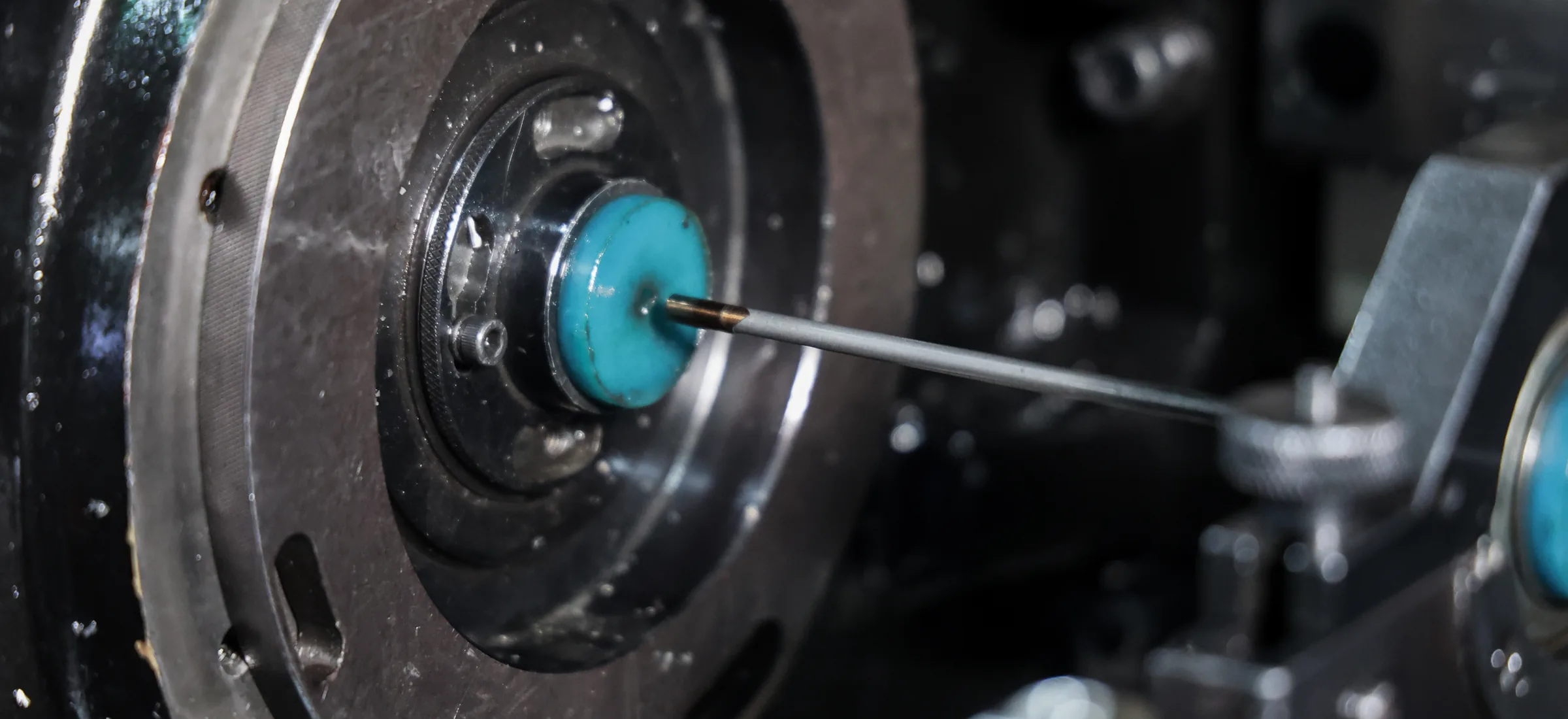
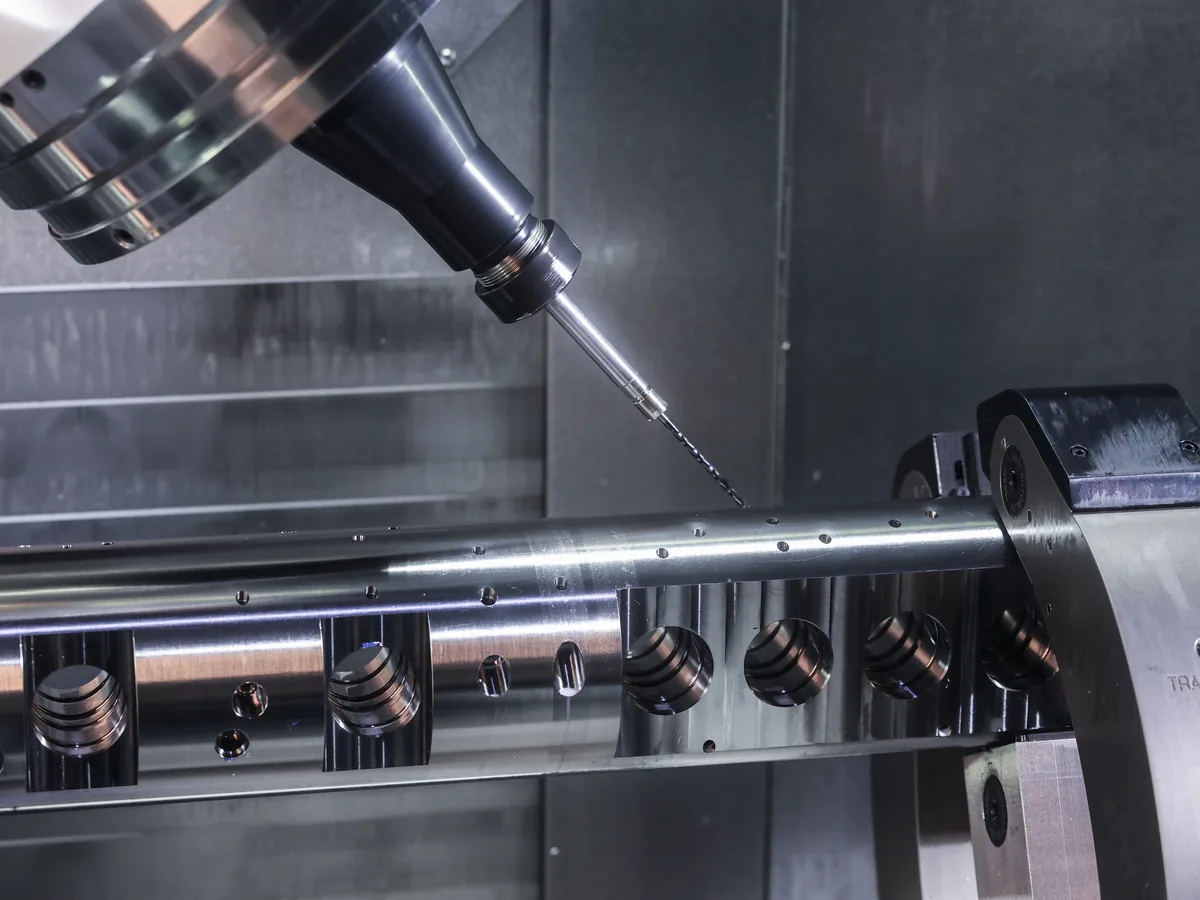
Offshore parts are long and thin, and the features that decide them sit metres inside the workpiece. Our BTA line runs to 12,000 mm of travel with Ø20–300 × 10,000 mm proven in production, and gun drilling covers Ø2 mm to 6,000 mm. Same-setup drilling and boring means no second clamping and no second error.
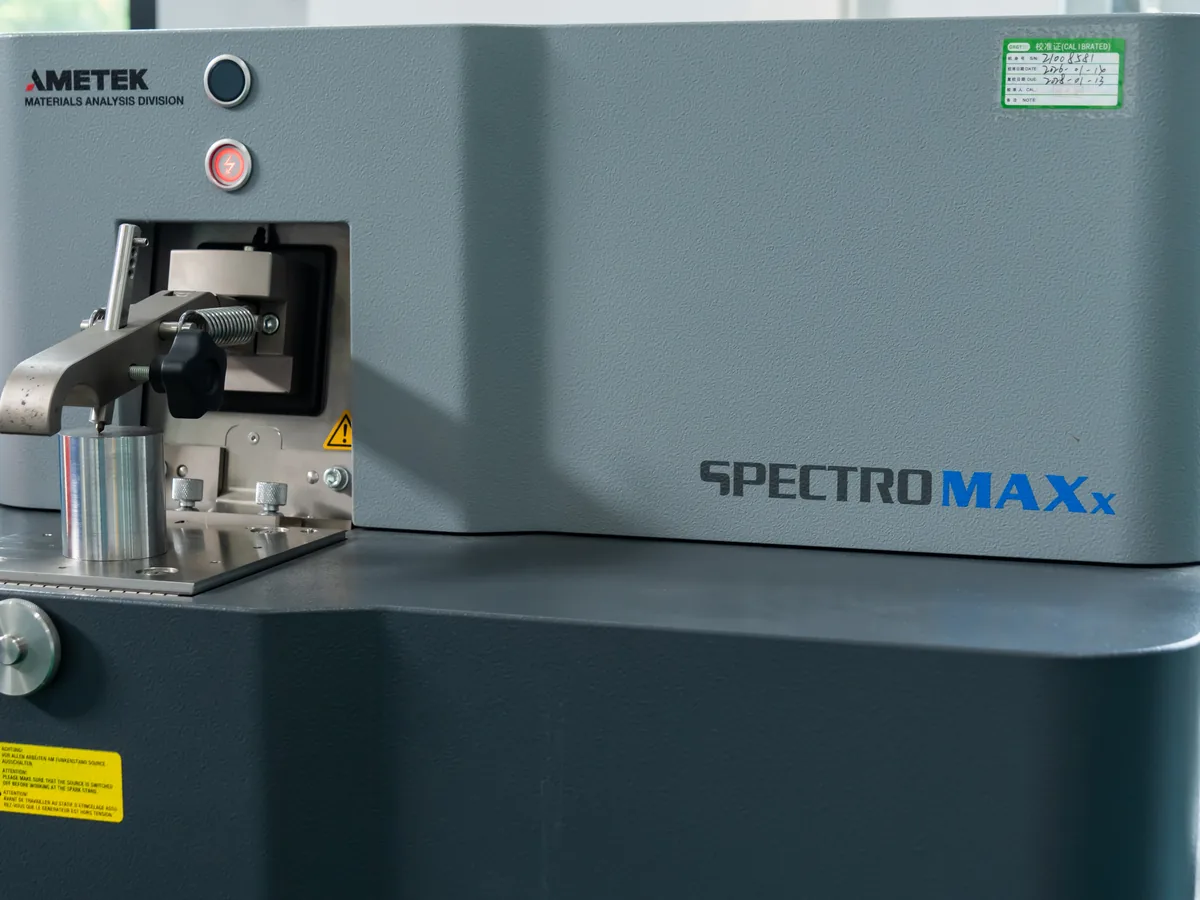
P550-class stainless and similar grades hold the permeability that MWD tools depend on, and work-harden aggressively under the tool. Our parameter windows and tooling strategy come from years of downhole part experience, and permeability is verified at incoming inspection.
The JV test infrastructure is unusual for a machining supplier: a high-temperature/high-pressure vessel rated 180 °C / 180 MPa with a Ø450 × 10,000 mm chamber, a 25 MPa water-loop stand circulating complete instrument strings up to 50 m, and a 60-ton dual-shaker vibration table rated for 12 m / 2-ton tools.
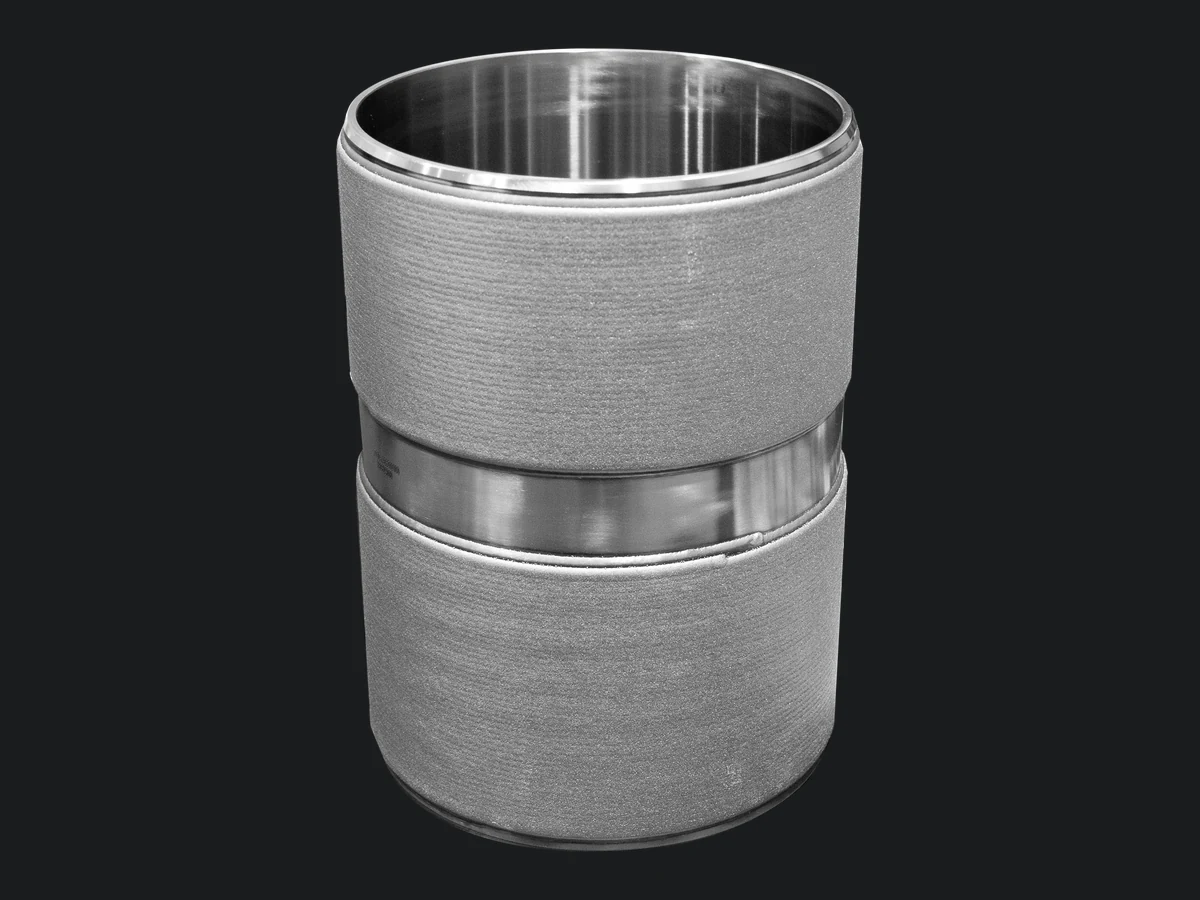
Laser-clad tungsten-carbide nickel-base bands (embedded particles above 2,000 HV, working hardness above 50 HRC), PTA and flame-spray hardfacing, and rebuild programmes for worn pads and ribs — all in-house, with the coating allowance engineered into the machining program.


TÜV Rheinland certified, certificate No. 01 100 019813, continuously certified since 2002
API Spec Q1 (Q1-4969, 10th Ed.), API 7-1 (7-1-1795) and API 7-2 (7-2-1240) are held by our joint venture Zhonghai Wantai, not by Zhongnan Machinery. Programmes covered by those licences run on JV lines under that system.
Since 2005 we have machined rotary-steerable and MWD components — over a decade of it for one of the three major international oilfield service companies. The systems we supply parts for have completed 3,700+ wells and 3.6 million metres drilled (as of July 2026).
JV high-temperature/high-pressure vessel rated 180 °C / 180 MPa (Ø450 × 10,000 mm chamber), 25 MPa water-loop stand for instrument strings up to 50 m, 60-ton dual-shaker vibration table
Heat-number traceability, frozen routings after part approval, dimensional reports with every order; FAI packages and third-party inspection on request
MWD/LWD housings, rotary steerable components including pads and ribs, valve bodies and hydraulic control unit bodies, and non-magnetic drill collars are all in batch production. Drive shafts are handled routinely as slender shafts to 4,500 mm. Send a drawing and we will tell you plainly whether it is familiar or new.
That is the normal case, and the reason DFM feedback exists. Most drawings that arrive are complete for milling and silent for drilling. Send what you have — an engineer replies within 24 hours and will tell you which callouts would change the route, the price or the lead time.
API Spec Q1 (Q1-4969, 10th Ed.), API 7-1 (7-1-1795) and API 7-2 (7-2-1240) are held by our joint venture Zhonghai Wantai, not by Zhongnan Machinery. Programmes covered by those licences are machined and validated on JV lines under that certified system. We state this plainly because the certificates are not ours to display.
NDA first if you prefer — yours or ours. Files are stored in an encrypted, access-controlled system and never leave our facilities. Nothing you send becomes public: every case study and page on this site is written from general process knowledge, never from a customer drawing.
The drawing, the material grade, the service envelope (temperature and pressure), bore depth and diameter, wall thickness at the thinnest section where relevant, quantity and target delivery. An engineer replies within 24 hours with manufacturability feedback; the quote follows once the information is complete.
Most drawings arrive complete for milling and silent for drilling. That silence is what turns a quote into a week of email — so send what you have, and the gaps are what the first reply addresses.
STEP / DWG / DXF / PDF welcome. NDA first if you prefer — yours or ours.
Related: Oil & Gas Industry|P550 Non-Magnetic Machining|Deep-Hole Drilling|All Parts